

9 Marketing Automation Trends You Can’t Afford to Ignore in 2026
Table of Contents
Marketing Automation Trends make one thing clear: marketing departments are swimming in work. It’s a wonder any of it gets accomplished between running campaigns on a dozen different properties, collaborating with creatives, and attempting to segment content for tens of thousands of users.
Where automation comes in. And we aren’t referring to the rigid, clunky automation of five years ago. The automation trends of today are smart and flexible, and they make your life easier instead of creating new headaches.
This report will walk you through the nine biggest changes presently occurring in the automation of marketing workflows, the kind of things the successful are doing, and the things the struggling are not.
Understanding Marketing Workflows: The Basics
What are the marketing workflows? Let me put it like an assembly line. In each campaign, there are certain tasks, suggestions, content creation, seeking approval, scheduling a post, and analyzing performance. This defines the workflow.
What we used to think of as “marketing workflows” now typically involves endless email loops, followed by status meetings. Today, “The most successful teams have created their own marketing automation workflows that can take care of repetitive work, so humans can focus on what drives results.”
Effective management of the marketing workflow has nothing to do with controlling the people on your team; rather, it’s about eliminating the frictions that slow everyone down.
So, what are marketing workflows? Think of them like an assembly line. Every campaign follows a clear set of steps, including planning tasks, sharing ideas, creating content, getting approvals, scheduling posts, and tracking performance. Together, these steps make up a marketing workflow. In the past, marketing workflows often meant long email threads, scattered feedback, and frequent status meetings. Today, the most successful teams work differently. They use marketing automation workflows to handle repetitive tasks, so teams can focus on strategy, creativity, and results.
Tools like Addlly AI help streamline these workflows by automating content creation and optimization across each stage. Effective marketing workflow management is not about controlling people. It is about removing friction. When workflows are clear and automated where possible, teams move faster, collaborate better, and produce stronger outcomes.
Why Marketing Workflow Automation Matters Now
Here’s what changed: customers expect personalized experiences across every channel. Your team’s expected to deliver that while also doing more with less budget. Manual processes just can’t scale to meet those demands.
Modern digital marketing workflows connect your entire tech stack, CRM, email platform, social scheduler, and analytics into one smooth operation. When someone downloads your lead magnet at 2 AM, the right workflow marketing system kicks off a nurture sequence automatically. No manual uploads. No forgetting to follow up.
That’s the power of getting your marketing campaign workflow right.
Trend #1: AI That Actually Predicts Problems Before They Happen
Forget basic task automation. The latest AI-powered tools are analyzing your marketing workflow automation patterns and spotting issues before they derail your campaign.
Here’s what that looks like in action:
- The system notices your design team is swamped and automatically redistributes tasks
- It predicts approval will take three days based on similar projects and adjusts deadlines
- It flags potential bottlenecks in your marketing workflow process before they cause delays
- Campaign quality improves because you’re fixing issues proactively, not reactively
Top marketing teams are seeing 40% faster campaign launches just by letting AI optimize their marketing content workflow. The system learns from every project, building a smarter marketing workflow chart that gets better over time.
Real talk: This isn’t about replacing your team. It’s about giving them superpowers to see around corners and stay ahead of problems.
Trend #2: Email Sequences That Feel Like Personal Conversations
Remember when email automation was something like broadcasting the same email to all? Well, those days are long over.
The email marketing workflows use behavioral triggers based on real-time data and can provide a truly personalized experience because it looks for behaviors such as:
- Browses your pricing page but doesn’t convert
- Engages with three blog posts about a specific topic
- Opens emails on mobile during their commute
- Engages with your brand across various touchpoints, including traditional advertisements like what is OOH in marketing (that’s Out-of-Home, think billboards, bus stops, and subway ads)
The most effective email marketing workflows will adapt to these cues. Someone researching a product is going to see a different message depending on how long they’ve been researching versus someone who found them yesterday.
Pro move: You can begin with a good template for a marketing automation email workflow, and then build personalization “triggers” based upon what you learn about what resonates with a given audience.
Trend #3: Marketers Building Their Own Automation (No Developers Required)
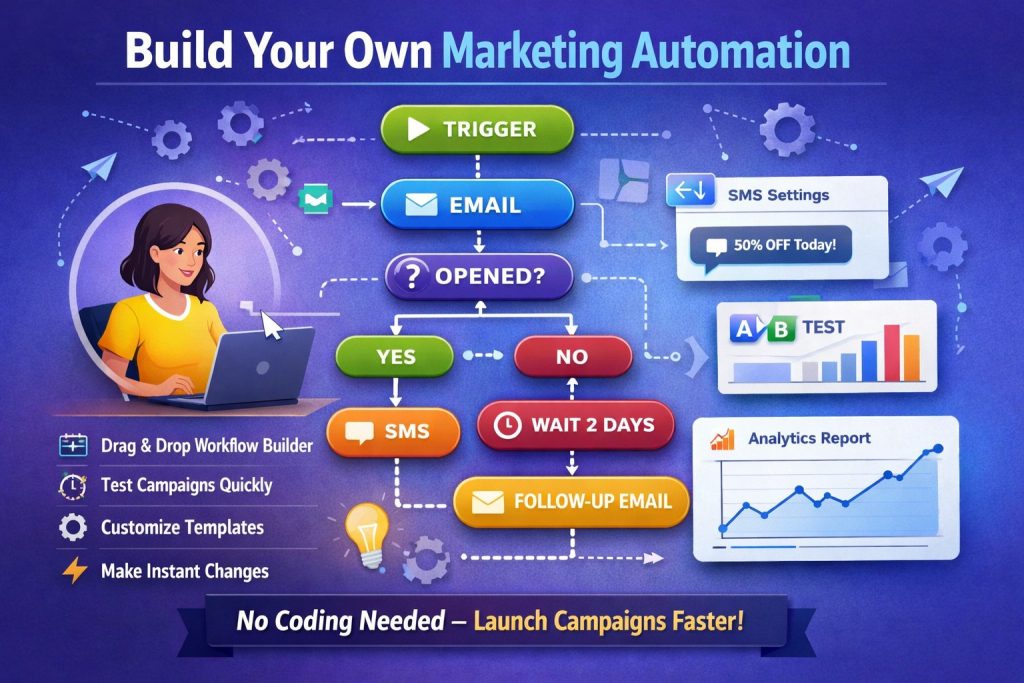
This is huge: you no longer need to beg IT for help every time you want to tweak a workflow. No-code platforms have democratized marketing workflow automation massively.
What this means for your day-to-day:
- Create sophisticated digital marketing workflows using drag-and-drop builders
- Test new marketing campaign workflow ideas without a three-month development queue
- Customize marketing workflow templates to match your exact process
- Make changes on the fly when campaigns need adjusting
These platforms come loaded with proven marketing workflow examples you can clone and adapt. Building a complex marketing workflow chart now takes hours instead of weeks.
With DDQ AI, you can also automate responses to complex questionnaires within your marketing workflows, saving time and reducing manual effort.
The result? Marketing teams are moving faster and experimenting more because they’re not bottlenecked by technical resources.
Trend #4: Connecting Every Touchpoint Into One Seamless Journey
Your customers don’t think in channels. They just experience your brand across email, social, your website, ads, and physical locations. So why are most marketing workflows still siloed by channel?
Smart cross-channel orchestration means:
- Customer data flows between all systems in real-time
- Your marketing automation workflows trigger the right message on the right channel
- Messaging stays consistent whether someone’s reading an email or seeing a Facebook ad
- Both online and offline experiences feel interconnected
Check out this great example: A person views an OOH marketing campaign on a subway ad, clicks a QR code, and participates in a location-based marketing process that references the ad they just viewed. This type of integrated experience can actually lead to conversion.
The terminology there is “omnichannel orchestration,” although what it really boils down to is treating people like customers, not like database records.
Trend #5: Analytics Built Right Into Your Workflows
Used to be you’d launch a campaign, then scramble to pull reports from five different platforms to figure out what happened. That approach is ancient history.
Modern marketing workflow management embeds analytics directly into the digital marketing workflow process. You’re seeing performance data in real-time as campaigns run, not weeks later.
What you get:
- Live marketing workflow chart showing exactly where campaigns are and how they’re performing
- Automated alerts when metrics dip below benchmarks
- Predictive analytics forecasting results before campaigns even finish
- Clear visibility into which marketing workflow examples deliver the best ROI
This intelligence transforms static marketing workflow templates into adaptive systems. You spot what’s working, double down on it, and kill what’s not, all before wasting the full budget.
Trend #6: Workflows Built for How Teams Actually Work Together
COVID changed everything about team collaboration. The best workflow marketing tools recognized this and rebuilt themselves around remote and hybrid work realities.
Modern collaboration features include:
- Real-time co-editing so multiple people can work on the marketing content workflow simultaneously
- Automated status updates that eliminate pointless “just checking in” meetings
- Context-rich notifications that actually tell you what you need to know
- Streamlined approval routing in the marketing workflow process
These platforms essentially form the main hub for your team. Gone are the days when information was spread across Slack, emails, Google Docs, and project management systems, because everything exists in one space now. The marketing workflow management system also holds marketing automation workflow templates that marketing teams can customize together, allowing all team members to be on the same page regarding work practices.
Trend #7: Automated Brand Police (In a Good Way)
When you have more teams and more campaigns, brand consistency becomes an issue. When you add regulations, particularly in sectors like medical, finance, and other regulated industries, it becomes a nightmare to review content manually.
Automated governance solves this:
- Every asset gets checked against brand guidelines automatically before going live
- Legal requirements get validated within the marketing campaign workflow
- Asset rights management prevents using images or content for which you don’t have permission
- Complete audit trails documenting every decision in the marketing workflow process
Picture this: Your marketing content workflow automatically flags content using the wrong logo version, containing unverified claims, or missing required disclosures, all before it reaches a human reviewer.
This preventive approach built into digital marketing workflows saves massive time and eliminates costly mistakes that damage brand trust or trigger legal issues.
Trend #8: Your Entire Marketing Stack, Finally Working Together
Most marketing teams use 10-20 different tools. Email platform, CRM, social scheduler, analytics, content management, webinar platform, the list goes on. Getting these systems to talk to each other used to require an army of developers.
Not anymore. Modern automation trends prioritize seamless integration, letting you build marketing automation workflows that span your entire tech stack.
Integration capabilities that matter:
- Pre-built connections to major platforms (no custom coding required)
- APIs for connecting proprietary or niche systems
- Automatic data syncing across the digital marketing workflow process
- Intelligent data transformation ensuring everything stays consistent
Now your CRM, email platform, and analytics can all participate in a single marketing workflow chart. Data flows automatically, triggers fire across systems, and you maintain one source of truth.
Marketing workflow templates can orchestrate a variety of processes across multiple platforms, all while providing a single perspective on their progress.
Trend #9: Let Customers Tell You What They Want (Then Deliver It Automatically)
Check out the following brilliant solution that’s seriously trending: leveraging interactive content like quizzes, calculators, and assessments, and letting prospects segment themselves, then automatically activating targeted marketing workflows based on their submissions.
Why this works so well:
- People willingly provide detailed information about their needs and preferences
- Engagement rates crush traditional content formats
- Automatic segmentation that’s way more accurate than guessing
- Triggered email marketing workflows that feel personalized because they actually are
Here’s the magic: Someone takes a product recommendation quiz on your site. Based on their responses, they are automatically placed into the workflow of a marketing campaign targeted specifically at them and their needs.
Sites such as Outgrow do a very good job in this regard, with the ability to easily create interactive experiences that can then funnel straight into your marketing automation workflows.
These are the kinds of touchpoints that you can integrate into the overall process that the marketing workflow entails to create an enjoyable experience that consumers aren’t necessarily ignoring.
How to Actually Implement This Stuff: A Practical Game Plan
Recognizing these automation trends is one matter. Organizing them is a different consideration altogether. Take a look at the way effective teams address the management of marketing workflows.
Step 1: Map What You’re Already Doing
Before automating, you need to understand your current marketing workflow process. For each major campaign type, document:
- Every single task from start to finish
- Who hands off work to whom
- Where approvals happen and who’s involved
- Current bottlenecks and pain points
- Which tools and systems are you using at each stage
Create a visual marketing workflow chart for your most common campaigns. You’ll immediately see opportunities for improvement.
Step 2: Find Your Quick Wins
Don’t try automating everything at once. That’s how automation projects fail. Instead, prioritize marketing workflows based on:
- How often they run: Weekly email marketing workflows deliver more value than annual campaigns
- Time they consume: Focus on processes eating up significant team hours
- Mistake frequency: Workflows with high error rates benefit most from automation
- Growth potential: Processes that need to scale as you grow
Start with digital marketing workflows that check multiple boxes. You would like to see wins that deliver value quickly and momentum for bigger projects.
Step 3: Start With Proven Templates, Then Customize
Why reinvent the wheel? Start with proven marketing workflow templates to suit your requirements:
- Lead nurture email marketing workflows
- Content creation and approval marketing content workflow frameworks
- Event promotion marketing campaign workflow structures
- Customer onboarding sequence templates
Most platforms offer extensive libraries of marketing workflow examples across different use cases. Clone these proven templates, then adapt them to your brand voice, team structure, and specific requirements.
This approach gets you live faster while incorporating best practices from successful campaigns.
Step 4: Launch Small, Measure Everything, Then Scale
Resist the urge to automate your entire operation on day one. Instead:
- Start with a pilot marketing workflow that has a limited scope and risk
- Track performance against your old manual process
- Gather honest feedback from team members actually using the system
- Finalize and optimize based on practical use
Every process in an automated marketing workflow should be monitored for what is important: time savings, elimination of errors, improvements in campaign results, and staff satisfaction with the new process.
These reasons support continued investment in these workflows, which can be automated based on smart decisions.
Step 5: Keep Making It Better
The most effective marketing automation process keeps improving. Set up regular reviews to:
- Analyze marketing workflow chart data for emerging bottlenecks
- Update marketing workflow templates based on what you’re learning
- Test new automation trends that could add value
- Train team members on workflow best practices and new features
Always in mind: being the best at workflow marketing isn’t something you get and then stop. It’s a continued effort at being the best at workflow Marketing in the constantly changing environment.
Various Industries Follow Various Needs
Although the principles remain the same wherever they are applied, the relevance of the challenges in a particular market workflow management can be identified based on the industry involved:
B2B Tech and SaaS Organizations
What matters most:
- Long, complex marketing campaign workflow structures with multiple touchpoints
- Account-based marketing, digital marketing workflows targeting specific companies
- Coordinating product launches across product, marketing, and sales teams
- Tight integration with sales enablement and CRM platforms
Best approach: Build marketing automation workflows that align closely with your sales process, ensuring marketing and sales work from shared data and coordinated outreach.
E-commerce and Retail Brands
What matters most:
- High-volume email marketing workflows for cart abandonment and browse abandonment
- Seasonal marketing workflow templates that deploy quickly for Black Friday, holiday rushes, etc.
- Marketing operations with awareness of the inventory that can adjust accordingly
- Post-purchase sequences that drive repeat purchases and reviews
Best approach: The best course of action would be to focus on marketing automation based on consumer behavior in real-time and inventory levels to provide dynamic experiences that drive conversions.
Healthcare and Financial Services
What matters most:
- Compliance-heavy marketing content workflow with multiple approval gates
- A highly controlled digital marketing workflow process with a strong need for documentation and privacy
- Privacy Support Marketing Processes Fully Compatible with HIPAA, GDPR, GDPR, etc.
- Educational content sequences build trust over extended timeframes
Best approach: Implement robust marketing workflow management with built-in compliance checking and comprehensive audit trails that satisfy regulators.
Agencies and Professional Services
What matters most:
- Client-specific marketing workflow templates that deploy and customize quickly
- Managing multiple client campaigns within unified marketing workflows
- Resource allocation across simultaneous marketing campaign workflow projects
- Automated reporting and client communication
Best approach: Build flexible marketing automation workflow template libraries, balancing standardization with client-specific customization.
Mistakes That Kill Automation Projects (And How to Avoid Them)
Experienced teams can still struggle with the introduction of marketing workflow automation. Just keep these factors in mind:
Trying to Automate Everything Immediately
- The Mistake: Trying to automate all workflow processes for marketing at one time overwhelms your team and typically leads to the creation of workflows that no one wants to use anyway.
- The solution: Identify 2-3 key marketing workflows and focus on those before scaling up. Start slow and build competency before attempting complex digital marketing workflows.
Ignoring the Human Side of Change
- The Mistake: Implementing new workflow marketing systems without adequate training will create resistance to change. They will leave your cool new toy in a corner, still untouched, as they do the old way.
- The Solution: Just involve your team members in the design of the templates of the marketing workflow, and train them. Encourage the early wins among your team members. Give them a sense of ownership of the new system.
Setting It Up Then Forgetting About It
- The Mistake: Viewing marketing automation workflows as a sort of project that has a defined endpoint rather than a living process.
- The Solution: Perform quarterly reviews of your workflows and optimize your marketing workflow chart based on your data and the latest trends in marketing automation.
Automating Away the Human Touch
- The Mistake: Removing marketing work eliminates the need for judgment, creativity, and relationship-building that actually differentiate your brand.
- The Solution: The development of marketing workflow process flows that would undertake repetitive functions while keeping human interaction in areas where they add most value or in decision making, creativity, or relationship development.
Building on Bad Data
- The Mistake: Automating the workflow process for marketing campaigns based on dirty, incomplete, or erroneous data. You’re just making mistakes quicker.
- The Solution: Set data quality standards prior to the implementation of marketing workflow automation and incorporate data validation within your digital marketing process.
What’s Coming Next in Marketing Workflows
There are, however, some trends that might emerge in marketing automation in the coming years after 2026:
Quantum Computing for Complex Optimization
It is still quite early, but it is possible that quantum computing might one day revolutionize the way we optimize complicated marketing processes. A foundational concept behind this shift is quantum data encoding, which focuses on how complex datasets can be efficiently loaded and represented in quantum systems to enable these advanced optimization capabilities. It might unlock answers to resource allocation and time-based challenges that are not possible with traditional computers.
Augmented Reality Goes Mainstream
As AR becomes normal, expect marketing content workflow processes that handle AR asset creation and testing just like we currently handle video content.
Talking to Your Workflows
Natural language interfaces may soon let you create and modify marketing workflow templates just by describing what you want, no visual interface needed.
Blockchain for Campaign Verification
Blockchain could provide unchangeable records of marketing campaign workflow execution, valuable for regulatory compliance and partner coordination.
Emotional AI That Really Connects With People
Future email marketing campaigns could use the capability for emotional intelligence to identify the mood of the receiver and tailor the message to that mood.
The Bottom Line
These nine trends of automation are a paradigm shift in the way marketing work gets done. Whether AI optimization or cross-channel experience, these trends make the work of marketing faster, better, and smarter.
Success is not about the most expensive equipment. Success is about the management of the marketing workflow, where speed and efficiency are combined with the creative input of the human.
Whether it’s the beginning of your implementation or improving an already optimized marketing automation process, never forget that: Start with the goal in mind, implement in stages, and measure rigorously. The strategies and marketing workflow examples in this guide give you a roadmap.
The teams winning in 2026 and beyond treat workflow marketing not as a tech project but as a fundamental rethinking of how marketing teams operate. They use marketing workflow templates as starting points for innovation, not rigid constraints. They look at current trends in automation in order to remain competitive.
As you develop or enhance your online marketing processes, keep your end goal in mind. This is what automation should enable, not replace, human abilities. The process of the marketing workflow is all about enabling your team to do what people do best – creative thinking, strategic planning, or establishing a human connection with the audience. Are you ready to revolutionize your marketing department? Start by auditing one critical marketing campaign workflow, identifying automation opportunities, and launching a pilot.
Start your 7-day free trial and build your first automation today. The future of marketing workflow automation is here right now. The only question is whether you’ll lead this transformation or play catch-up.
Frequently Asked Questions About Marketing Workflow Automation
Workflows are structured sequences of tasks and decision points that guide campaigns from planning to execution. Marketing workflows range from simple three-step email sequences to complex multi-channel campaigns.
Analyze your common campaign types, then select marketing workflow templates that match your structure, team size, and approval needs. Start with proven marketing workflow examples and customize based on your specific requirements.
Marketing workflows can be manual or automated, while marketing automation workflows use technology to handle execution with minimal human intervention. All automation workflows are workflows, but not all workflows are automated.
Track time saved per campaign, error reduction, launch speed, and team productivity. Compare digital marketing workflows against manual processes. Expect 30-50% time savings within six months of implementing marketing workflow automation.
No. Modern workflow marketing platforms feature no-code interfaces for building marketing workflows without programming. Most marketing workflow management tasks use visual, drag-and-drop tools.

Ankit Upadhyay is a Digital Marketing and SEO Specialist at Outgrow. With a passion for driving growth through strategic content and technical SEO expertise, Ankit Upadhyay helps brands enhance their online visibility and connect with the right audience. When not optimizing websites or crafting marketing strategies, Ankit Upadhyay loves visiting new places and exploring nature.