GAD-7 Anxiety Self-Assessment: A Trusted Tool to Screen for Generalized Anxiety Symptoms!
Anxiety can be subtle at first. It may feel like constant overthinking, tightness in your chest, irritability, or a sense that something might go wrong even when everything seems fine. Over time, these feelings can grow stronger and begin affecting work, relationships, sleep, and daily functioning.
The GAD-7 Anxiety Self-Assessment is one of the most widely used and clinically validated tools designed to screen for generalized anxiety symptoms. It provides a structured way to reflect on your mental state and recognize whether your anxiety may need professional attention.
If you are searching for a reliable anxiety self-assessment, an online GAD-7 anxiety test, or a scientifically supported generalized anxiety screening tool, this guide covers everything you need to know.
What Is the GAD-7 Anxiety Self-Assessment?
Table of Contents
The GAD-7, or Generalized Anxiety Disorder 7-item scale, is a short questionnaire developed to help identify symptoms associated with generalized anxiety disorder.
It is:
- Evidence-based
- Clinically validated
- Used worldwide in medical and therapy settings
- Quick and easy to complete
The assessment asks individuals to reflect on how often they have experienced specific anxiety-related symptoms during the past two weeks.
It is important to understand that the GAD-7 is a screening tool, not a formal diagnosis. It helps indicate whether anxiety symptoms may require further evaluation by a licensed mental health professional.
What Kind of Questions Does the GAD-7 Ask?
The GAD-7 focuses on common emotional and physical symptoms linked to generalized anxiety.
Here are examples of the types of questions included in the assessment:
- 1. Over the last two weeks, how often have you felt nervous, anxious, or on edge?

- 2. How often have you found it difficult to control your worrying?

- 3. How often have you felt afraid, as if something awful might happen?

Each question invites honest reflection. The goal is not to label yourself but to notice patterns in your thoughts and feelings.
These simple yet powerful questions often bring clarity to emotions that people struggle to describe.
Why the GAD-7 Anxiety Screening Is So Effective
One reason the GAD-7 anxiety test is trusted globally is its balance between simplicity and accuracy.
It works because:
- It captures both mental and physical anxiety symptoms
- It takes only a few minutes to complete
- It can be repeated over time to track changes
- It provides structured self-awareness
Many people live with persistent anxiety without realizing that their daily stress may be part of a larger pattern. A brief screening tool makes it easier to step back and evaluate objectively.
Who Should Consider Taking an Anxiety Self-Assessment?
You may benefit from taking a GAD-7 anxiety screening if you:
- Feel constant or excessive worry
- Struggle to relax even during downtime
- Experience irritability without a clear reason
- Have trouble concentrating due to racing thoughts
- Avoid situations because of fear or nervousness
- Notice anxiety interfering with productivity or relationships
It can also be helpful for individuals already receiving therapy who want to monitor symptom changes over time.
What Happens After You Take the Assessment?
An anxiety self-test is a starting point. If the results suggest frequent or persistent symptoms, consider:
- Speaking with a licensed therapist or psychologist
- Consulting a general physician
- Exploring cognitive behavioral therapy (CBT)
- Practicing structured stress-management techniques
- Improving sleep, physical activity, and routine
If anxiety feels overwhelming or includes severe distress, seek immediate professional help.
Early awareness leads to better outcomes. Anxiety is treatable, and many people experience significant improvement with the right support.
Creating a GAD-7 Anxiety Quiz Using Outgrow
If you are a mental health blogger, clinic, educational institution, or wellness brand, hosting an interactive GAD-7 Anxiety Self-Assessment on your website can significantly increase engagement and trust.
Instead of presenting a static questionnaire, you can build a fully interactive anxiety screening experience using Outgrow.
Outgrow allows you to create:
- Sign up on Outgrow – Start with a free trial or log in if you already have an account.

2. Choose a Quiz Template- Pick one suitable for a wellness or anxiety quiz.
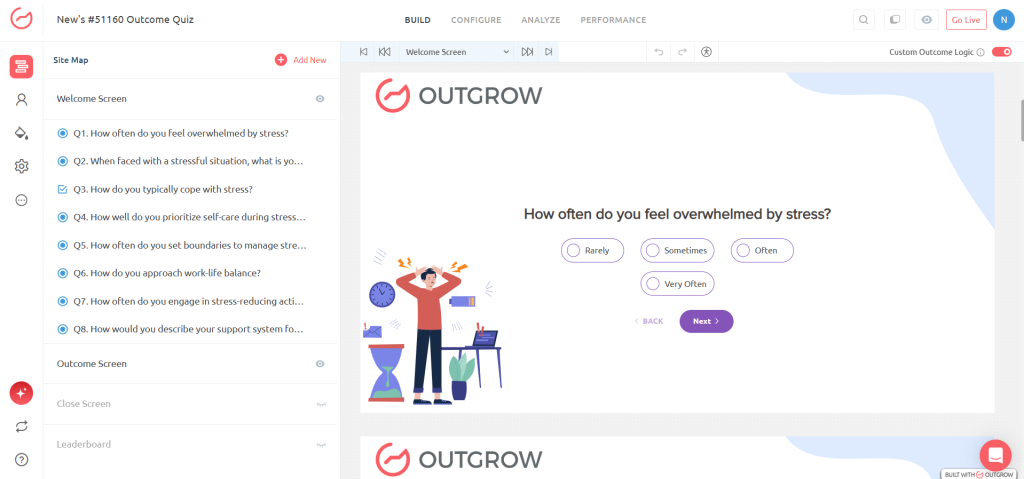
3. Craft Thoughtful Questions– Include questions about mood, sleep, energy, and interest in activities.
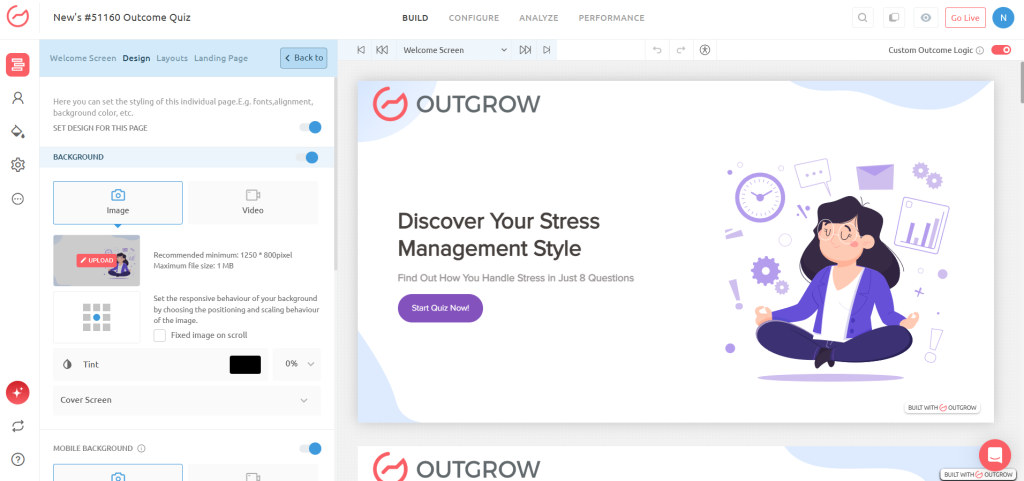
4. Design for Comfort—Use calming colors, readable fonts, and positive language.
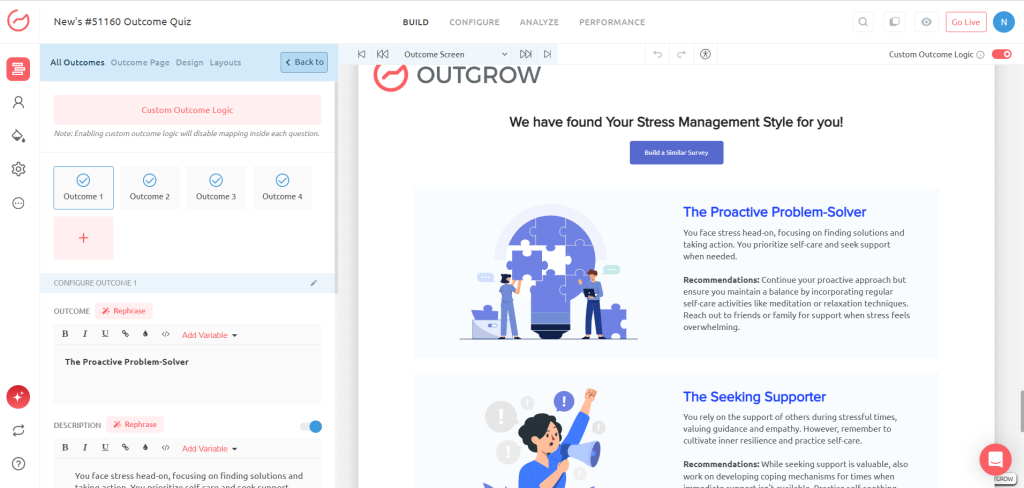
5. Personalize Results—Suggest resources, self-care tips, or professional help based on scores.
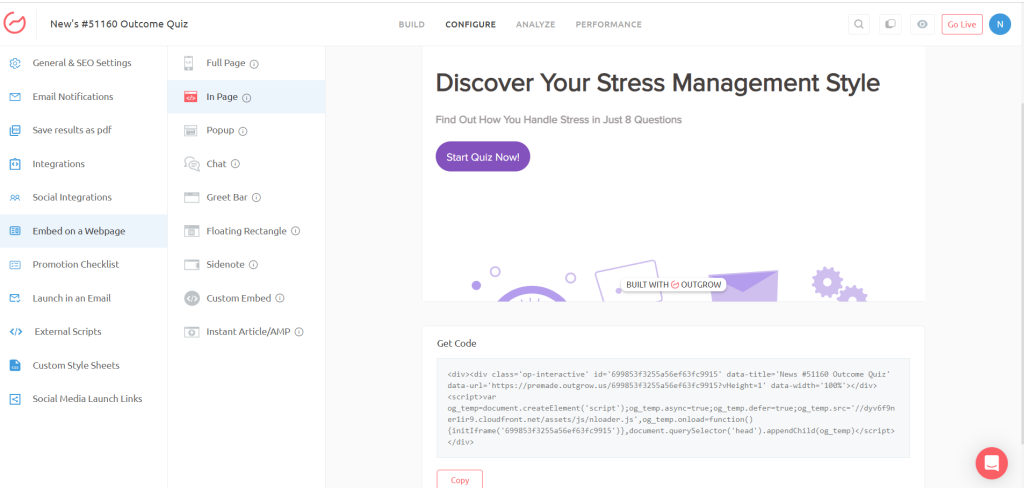
6. Promote Widely – Embed on your website, and share via email, social media, and paid campaigns.
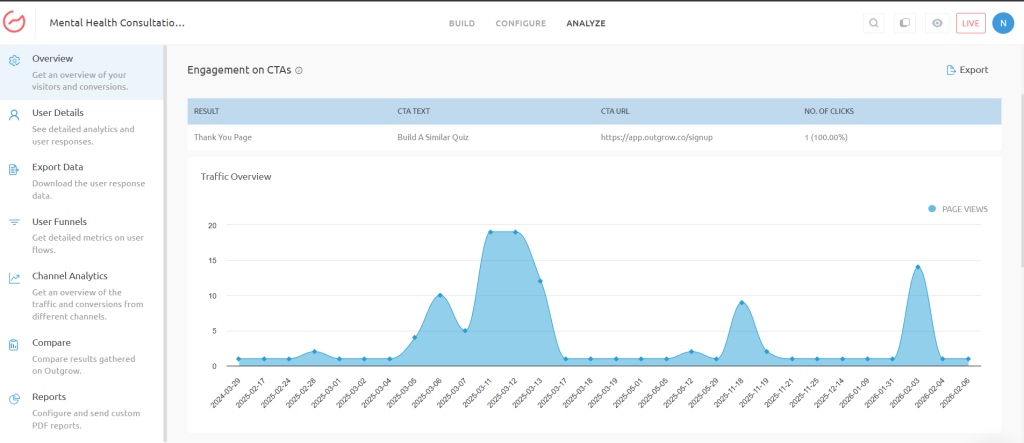
7. Analyze & Optimize—Use Outgrow analytics to see engagement, completion rates, and top concerns.
Why Use Outgrow for an Anxiety Self-Assessment?
Interactive mental health tools perform better than static blog content because:
- Users actively participate instead of passively reading
- Completion rates are higher
- Personalized result pages improve clarity
- Time spent on the page increases
- You can ethically collect leads with user consent
You can design calming layouts, use supportive language, and include helpful resources at the end of the assessment.
Final Thoughts
The GAD-7 Anxiety Self-Assessment makes understanding anxiety easy, clear, and accessible for everyone. By transforming feelings of worry and stress into measurable insights, it helps individuals recognize their symptoms and take the first steps toward support. When integrated into an interactive Outgrow format, you can create a fully functional, engaging assessment without writing a single line of code.
This approach not only benefits users by providing meaningful guidance but also benefits your website by increasing engagement, attracting traffic, and building trust with your audience. It is a seamless way to combine public mental health awareness with digital growth, empowering people while elevating your online presence.
Frequently Asked Questions
The GAD-7 Anxiety Self-Assessment is a short, evidence-based screening tool used to identify symptoms of generalized anxiety disorder. It includes seven questions that evaluate how often you have experienced anxiety-related symptoms over the past two weeks. It is widely used by healthcare professionals but can also be taken online for self-reflection.
No, the GAD-7 is not a diagnostic tool. It is a screening questionnaire designed to help identify possible anxiety symptoms. A licensed mental health professional must conduct a full evaluation to provide an official diagnosis.
The GAD-7 anxiety self-test typically takes less than five minutes to complete. Because it contains only seven questions, it is quick, simple, and easy to use as a regular mental health check-in.
Anyone experiencing persistent worry, restlessness, irritability, difficulty relaxing, or excessive fear may benefit from taking an anxiety self-assessment. It can also be helpful for individuals who want to monitor their mental health over time or track progress during therapy.
If your anxiety symptoms are intense, interfere with daily life, or include panic attacks or thoughts of self-harm, seek immediate professional help. Contact a licensed therapist, doctor, or local emergency service for support. Online anxiety screening tools are helpful first steps, but professional care is essential for proper treatment.

Bhawna Singh is a Marketing Generalist at Outgrow. With a knack for building connections and a talent for crafting impactful blog content, she ensures every piece resonates with the audience. When not strategizing campaigns, Bhawna channels her artistic side by bringing melodies to life through her singing or creating vibrant masterpieces on canvas.