The Complete Guide to HR Turnover Cost Calculator: Reduce Hidden Expenses and Boost Retention
It is famous that employee turnover is among the most crucial but most underestimated expenses that affect businesses nowadays. The HR Turnover Cost Calculator assists in estimating these hidden expenses and effective retention strategies. Direct expenses incurred regarding employee turnover easily get calculated (advertisements for recruitment, recruitment interviews, and employee onboarding), but hidden expenses may cost three to four times more with respect to an employee’s salary. As stated by SHRM (Society for Human Resource Management), employee turnover may cost six to nine months of that employee’s salary.
The costs of employee turnover have to be understood by any business wanting to ensure its profitability and stability. The costs of employee turnover help organizations make decisions related to employee retention, employee benefits, and improvements within the organizational culture.
In this extensive resource, we will discuss the construction and application of the HR Turnover Cost Calculator with Outgrow.co and the most effective factors of influence related to turnover costs.
Understanding the True Cost of Employee Turnover
Table of Contents
Prior to embarking on a project to design a calculator, it is necessary to consider the components involved in calculating the cost of turnover. This is because the turnover costs that many businesses calculate for themselves typically involve only some obvious elements, but reality is far broader than that.
Direct Costs: These costs encompass advertising vacant positions, recruitment agency costs, background screening, interview time of the hiring manager and other team members, relocation costs, and signing allowances. These costs are easily measurable but amount to the tip of the iceberg.
Indirect Costs: These costs matter the most. When an employee departs, his or her productivity is not paused; instead, the remaining workforce experiences a dramatic dip. Employees left behind have to take on the extra workload, resulting in overtime costs. It generally takes six to twelve months for the new employee to be at full productivity level. Also, the employee leaves behind the knowledge and skills possessed by they possess.
Morale can become an issue when there is a lot of turnover, causing disengagement for everyone. A domino effect occurs when turnover causes more turnover as remaining employees question why they are dedicated to an unstable institution.
Build an HR Turnover Cost Calculator with Outgrow.co
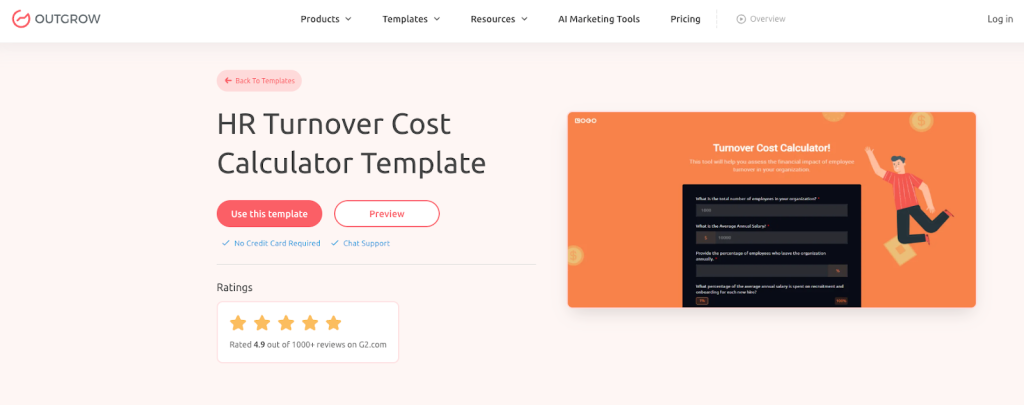
Outgrow.co has certainly changed the face of creating interactive content and conveys the same through its HR Turnover Cost Calculator template. Unlike boring sheets and techie software that require the intervention of the IT department, Outgrow is a no-code platform that can be easily handled by HR professionals.
With the drag-and-drop feature, you can easily create a turnover calculator, even if you know nothing about technology. You can develop a professional calculator in hours, instead of weeks. The templates are pre-loaded with professional questions, saving you the effort of developing them again.
What makes Outgrow special is that the software enables the creation of interesting and interactive experiences. Rather than providing users with a monotonous form, the calculator leads the user through a dialogue-based experience where the software calculates things on the fly based on the questions that the software asks. These questions help provide insights to the users.
To incorporate the template in your Outgrow account, follow these easy steps. You get to browse through your library of templates and choose the HR Turnover Cost Calculator to add to your workspace. This is where you begin to personalize your calculator and give it your workplace’s identity.
Key Factors for an HR Turnover Cost Calculator
Creating an effective employee turnover calculator requires understanding and incorporating all relevant cost factors. Here’s what your calculator should include:
Recruitment Costs

Recruitment is the most visible cost of turnover. Your cost calculator for turnover costs should include the cost of advertising jobs through job boards. The cost can go from free classified jobs to several hundred dollars for job advertisement websites. The average cost using recruitment agencies will lie between 15% to 25% of the first-year salaries of the new recruits.
There are also some additional costs to be considered in the case of internal recruitment. The cost of time spent by the hiring manager, HR representative, and team members viewing applications and selecting a candidate has to be taken into account. A background check, drug screen, and pre-employment test are additional expenses added to this cost.
When you enter your organization’s total number of employees and the average annual salary into the calculator, it assists in calculating how much of that salary goes towards the cost of recruiting or training each new employee.
Training Expenses
Once the new employee is hired, the outlay on bringing them on board starts. The costs of training, whether carried out internally within the company or through external sources, can be considered direct costs. In the case of internal training, the costs are measured by the time of the training and mentoring personnel, which is shifted away from their core activities.
The HR calculator requires you to input the percentage of the average annual salary used for training and development of each employee. This makes organizations aware of the total amount of investment that needs to be done in order to have the newly hired employees perform as expected.
The materials, software, equipment, and workspace related to the training facility all contribute to training costs. Contemporary training processes involving an gamified LMS have training facility software costs.
Lost Productivity

The most challenging but most important indirect cost would have to be lost productivity. When an employee quits his or her job, his or her work is not going to get done automatically. The employee’s work has to be shouldered by others or simply forgone. This means an immediate loss of productivity for an understaffed workforce.
The calculator will directly ask you to input the percentage of loss of productivity while the time is being processed for filling the empty spot. This is an extremely important factor for organizations, helping them understand the loss of finance aside from the recruitment finance.
Companies tend to underestimate the true cost of losing employees. They found in their research that apart from direct replacement cost, indirect costs such as lost productivity, cost of knowledge transfer, among others, can put a heavy toll on companies, an aspect that companies are not considering in budgeting.
In regard to new employees, there is an extended period before they are considered fully productive. Six to twelve months is typical for a majority of professional jobs. An understanding of these time frames can help ascertain proper costs for employee turnover calculations.
Administrative and Indirect Costs
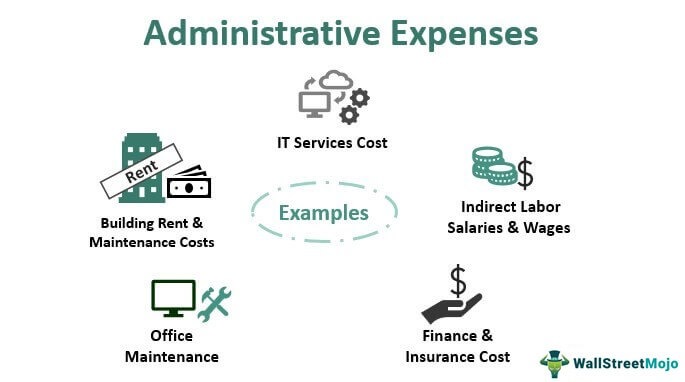
In addition to recruiting and training, there are various other tasks related to employee turnover. These include conducting exit interviews, processing documentation, making changes related to benefit administration, and managing access to systems.
The calculator allows for the entry of the percentage of average annual salaries that go into administrative issues concerning turnover. While such issues may appear to be very trivial in themselves, together they can add up rapidly for a number of departures.
Who Benefits Most from This Calculator?
The HR Turnover Cost Calculator serves multiple stakeholders within an organization, each gaining unique insights relevant to their responsibilities.
HR Professionals
Human resources departments are at the “front lines” with respect to turnover, handling everything from exit interviews to recruiting successors. With the help of the turnover calculator, HR managers can provide specific data to justify retention strategies. Rather than the generic claim that “turnover is expensive,” HR managers can quantify the cost associated with turnover.
Such findings can help to target retention strategies to areas in which high turnover cost has a significant effect. With that kind of cost calculated, HR professionals may present a compelling case to management to invest in employee retention.
Business Owners
For the business owner or executive, the calculation of employee turnover cost is essential in their strategic formulation and management of finances. The employee turnover cost calculator makes employee turnover, which is traditionally the concern of human resources in the company, a tangible expense that hits the company profits.
Small business owners greatly benefit from such a calculator. This is considering that in most small business setups, every employee is of significant value to the organization. Employers can therefore benefit from the calculator to determine if the offering packages are attractive enough to retain employees.
Financial Analysts
In order for financial analysts and controllers to make accurate forecasts and set budgets, comprehensive data is required. Employee turnover is a variable expense that could greatly affect financial projections if not forecasted appropriately.
The HR turnover calculator helps the analysts follow the trend over time; it does a quarter-on-quarter or year-on-year comparison of turnover costs so that an early overflow of questionable patterns is noticed, and hence interventionis taken prior to cases where turnover becomes too costly.
Team Leaders
Department managers and team leaders may not think about turnover in financial terms, but understanding the costs helps them recognize the importance of retention efforts. When a manager sees the calculated cost of losing a team member, they’re more likely to invest time in engagement and recognition activities that promote retention.
Customizing Your HR Turnover Cost Calculator
While Outgrow’s template provides an excellent starting point, customization ensures your employee turnover cost calculator accurately reflects your organization’s unique circumstances.
Adjusting the Cost Variables
Industry-related factors affect turnover costs greatly. Turnover challenges for aotech firm will be different from those of the healthcare sector or a manufacturing company. Adjust the default values of your calculator according to your industry.
For instance, if you are working in a niche area where the process of hiring normally involves the use of recruiters who demand higher fees, you should adjust the percentage ranges in your calculator accordingly. If your industry’s norm is eighteen months before achieving full productivity as opposed to the twelve months used as the standard, you should adjust the calculations in light of such facts.
Location is another factor to consider. Advertising to find recruits is more expensive in larger cities than it is in smaller cities. Tailor these factors to fit your conditions.
Incorporating Company-Specific Data
While a generic calculator is a good estimating tool, utilizing your actual data is a more reliable method. Take a hard look at your past year’s turnover and compile actual figures on advertising spend, recruitment cost, cost of training, and your actual time.
Determine an average tenure for your organization in relation to different roles and different departments within an organization. Some positions experience shorter tenures, which may reveal deeper organizational problems. Costs to replace employees vary significantly by role and seniority level. Organizations should develop role-specific calculator versions for more accurate projections.
Enhancing the Questionnaire
The template for the turnover cost calculator has some general questions regarding the total number of employees, average annual salary, turnover percentage, and many other factors. However, you can modify it according to your needs.
Add employee engagement survey data to identify disengagement patterns that drive turnover. Examine why employees leave and what critical knowledge they take with them. What role did he or she have with clients?
How Outgrow Makes It Easy
Calculation of the cost of turnover in a traditional way involves the use of complicated spreadsheets, which are a chore for most users. Outgrow makes the process enjoyable for the user by making it more engaging.
Create and customize the calculator without involving your IT team, thanks to the no-code builder.
With the conditional logic functionalities in Outgrow, it is possible to develop complex calculators that adjust according to the responses of the users. With the calculator in the Outgrow template, the user can get immediate responses with the calculation of the financial impact based on simple questions regarding the number of employees, salaries, turnover rate, and different percentages of cost.
The platform’s responsive design ensures your HR turnover calculator works perfectly across devices, including desktop computers, tablets, and smartphones. Outgrow also provides robust analytics, showing you how many people use your calculator, where they drop off, and what results they typically receive.
Integration capabilities allow you to connect your calculator with your CRM, marketing automation platform, or HR information system. This means calculator results can automatically populate into your existing systems, eliminating manual data entry.
Using Your Calculator for Strategic Decision-Making
Building the calculator is only the first part of the story. Organizations realize the real benefit when they act on the calculator’s insights.
Begin by estimating your company’s actual turnover cost over the past year. Enter your total employee count and annual employee turnover percentage. Along with your average annual salary and designated cost percentages, this employee turnover cost calculator shows a complete turnover cost calculation.
HR teams can use calculator results to plan budgets, assess retention strategy effectiveness, and determine break-even points. Share these insights with department managers to align retention efforts across the organization.
Use the “turnover calculator” in the context of exit interviews in order to accurately assess the organizational impact of each turnover. Further, this can also aid in decision-making regarding counter-offer situations of departing employees.
Start Your Interactive Content Journey Today

Interactive content like the HR Turnover Cost Calculator transforms boring data into engaging, actionable insights. Personalized interactive media, such as calculators or quizzes, witness the conversation rate jump by as much as 30-40%, depending upon the niche. The truth is that 43% of consumers favor interactive media over static media.
This is a natural trend. Interactive content demands active participation, which creates memorable experiences users won’t easily forget. Viewers not only receive information but enter their own information to get related data insights.
Your customers demand interactive experiences while competitors still rely on static content. Those who use interactive content will see enormous benefits in catching the eye of their audience, creating lead conversions, and proving the value provided to their consumers.
Regardless of whether your goal is to develop HR calculators for analytical tools, employee engagement assessments, or recruitment marketing quizzes, interactive content outperforms static content every time.
Ready to turn passive fans into dedicated superfans? Start your free Outgrow trial today and join the interactive content revolution! With Outgrow’s intuitive interface and vast template library, you can produce high-quality interactive content in hours, not weeks!
Implementing Your Calculator Across the Organization
After you have developed your calculator for turnover costs, you can then implement it to reap maximum benefits.
First, present the tool to leadership by demonstrating its capabilities and the insights it provides. Walk executives through the calculator, showing how it generates various cost projections based on their input data.
Train your HR department well on using the calculator for its application and analyzing the data obtained through calculator use. They can present the data in a way that turns the output into recommendations.
Establish a standard operating procedure that can easily define the use of the calculator during exit processes. Share this calculator with departmental managers to help them appreciate the financial impact associated with turnover within teams.
Make the results of calculators regular parts of reporting from the HR organizations to the leadership. This could be quarterly summaries: total cost of turnover, trends over time, and comparison to industry benchmarks.
The Broader Impact of Understanding Turnover Costs
By understanding what costs of turnover mean to an organization, a paradigm shifts on how to manage talent. Using retention strategies will no longer be a soft skill HR consideration but a profit-focused priority.
This paradigm shift offers more investment in the area of employee experience, development, and engagement metrics. For businesses that estimate their expenditures in engaging their employees, there may be improvements in benefits, compensation, or even workplace culture offerings.
The human resource turnover cost calculator also encourages evidence-based decision-making in human resource management. Whereas before they relied on intuition, human resource managers now have the ability to make decisions based on financial evidence.
Understanding the cost of turnover can additionally help in planning. Organizations can project budgets more accurately by multiplying the annual turnover ratio by the cost per employee.
Perhaps most importantly, transparency around turnover costs leads to accountability. When all employees have clarity around turnover costs, the whole organization gets more engaged in the area of retention.
Conclusion
Employee turnover significantly impacts the bottom line of every modern organization. However, it often proves that most of these organizations could not have any clarity regarding such expenses.
An HR Turnover Cost Calculator refers to a formula transformation of the above equation. This helps organizations make informed investment decisions on retention strategies with the financial implications of turnover quantified.
Outgrow.co removes any barriers to making this available to any business. The platform allows easy interface, templates, and interactions for HR professionals to develop a professional turnover calculator to engage and provide accurate data to the audience.
The questions asked by the calculator concerning total number of employees, average salary, turnover rate, recruitment cost, training cost, administrative overhead, as well as productivity loss, help to present a complete view when addressing financial losses involved in employee turnover.
Whether you are an HR representative looking to prove ROI for retention strategies, a business owner looking to understand how employee turnover affects a bottom line, or a financial analyst pouring over costs including human capital expenditures, using an HR Turnover Cost Calculator will give you insight for which you are looking.
Create your turnover cost calculator now, unlock the insights that have been hiding within your company’s financial reports, and begin your journey to building a stable and profitable workforce.
Frequently Asked Questions
This will typically be from six to nine months of the departing employee’s salary. However, it would be highly dependent on the type of employee and the rank.
Anyone can use Outgrow’s template in a couple of hours to develop their own HR Turnover Cost Calculator without coding skills.
Indirect turnover costs include lost productivity during vacancy periods, training expenses for existing employees, reduced team morale, lost institutional knowledge, and onboarding time for new hires.
Yes, small businesses feel the impact more severely since losing one employee affects a larger portion of their workforce. Thus, the calculation of cost is essential for them.
Calculating the turnover cost happens on a quarterly basis for the purpose of observing trends, annually for budgeting, and on every exit.

Deeksha Malik is a Marketing Professional at Outgrow, working at the crossroads of people, brand, and growth. She helps scale teams, strengthen employer branding, and drive B2B marketing campaigns that actually move the needle. Known for balancing strategy with execution, Deeksha enjoys building meaningful campaigns and smarter growth stories. When she’s not working, you’ll likely find her with a good cup of coffee, staying curious about marketing trends, people dynamics, and what makes a brand memorable.