Ovulation Calculator: Know Your Fertile Window Before You Guess
Most people trying to figure out their most fertile days start the same way: counting on their fingers from the last period, guessing at “day 14,” and hoping that’s close enough.
It usually isn’t. Cycles vary from person to person, and even from month to month for the same person.
The number that actually matters is your fertile window, the days when conception is realistically possible based on your last menstrual period, your average cycle length, and how long your period usually lasts. Skip that number, and you’re left guessing at timing that changes every cycle. Whether you’re trying to conceive, spacing out pregnancies, or just want to understand your own body better, an ovulation calculator takes the guesswork out of the picture.
Below is how the ovulation calculator works, how the results shift depending on your cycle, and how you can get your own dates in about two minutes using a free tool from Outgrow.
What Is an Ovulation Calculator?
Table of Contents
An ovulation calculator estimates when you’re likely to ovulate and which days make up your fertile window, based on your cycle details rather than a rough guess. Once those dates exist, planning around them, whether that’s trying to conceive or avoiding it, stops being a guessing game and starts being something you can actually track.
It starts with the first day of your last period. From there, the ovulation calculator factors in your average cycle length to estimate when ovulation is likely to happen, since ovulation typically occurs about two weeks before the next period starts, not two weeks after the last one ended.
A few things shape the result:
- Cycle length changes everything, since a 24-day cycle and a 34-day cycle put ovulation in very different places.
- Period length plays a smaller role, mostly in narrowing down the early fertile days.
- Cycle regularity matters a lot. Someone with predictable cycles gets a tighter, more reliable estimate than someone whose cycles shift month to month.
- Your goal, whether you’re trying to conceive or trying to avoid it, decides how you actually use the dates once you have them.
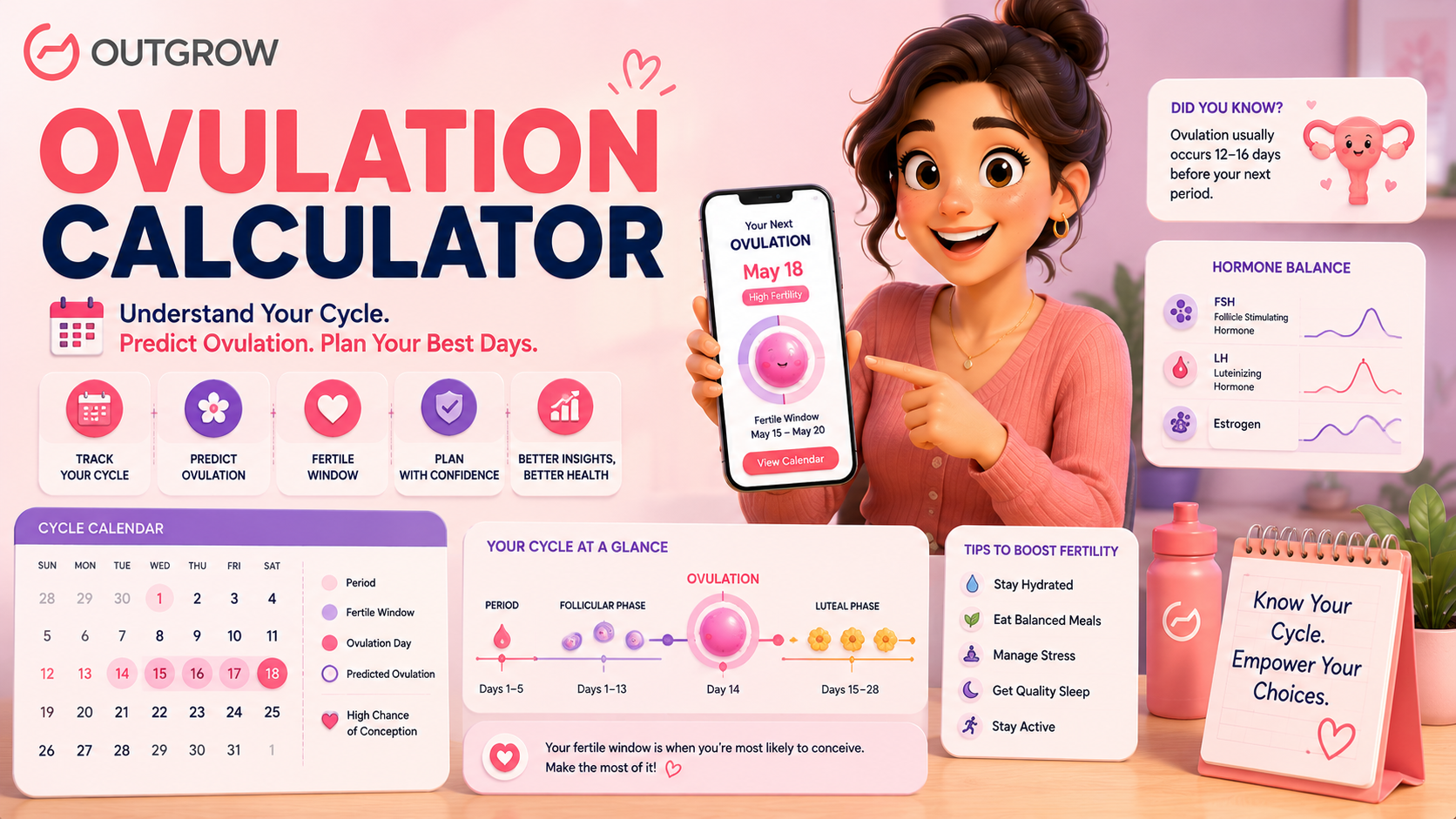
Run all of that through the ovulation calculator and out comes a set of dates: estimated ovulation day, fertile window start and end, next expected period, and a suggested pregnancy test date.
Why Your Ovulation Calculator Number Matters More Than You Think
“Just track your period” is where most people start, without ever pinning down what their actual fertile window looks like. That’s a bigger gap than it sounds like.
Here’s what having those dates actually gets you:
- A real target instead of a guess. “Sometime mid-cycle” isn’t useful. “Days 12 through 17” is something you can plan around.
- Better timing for conception. Since the fertile window closes fast, the ovulation calculator gives couples trying to conceive a narrower, more accurate stretch to focus on instead of spreading effort across the whole month.
- A heads-up on irregular cycles. If the ovulation calculator keeps producing dates that don’t line up with what you’re actually experiencing, that’s worth mentioning to a doctor before too long.
- Less stress around timing. Knowing the dates in advance removes a lot of the constant “is today the day” uncertainty that builds up when nothing’s mapped out.
- A realistic pregnancy test date. Testing too early just leads to false negatives and unnecessary stress, and the ovulation calculator gives you a date that’s actually worth trusting.
Know your dates, and decisions come from your actual cycle. Skip them, and confusion, missed windows, and frustration tend to follow.
How to Use the Ovulation Calculator
Cycle details ready? The ovulation calculator takes barely a minute to run.
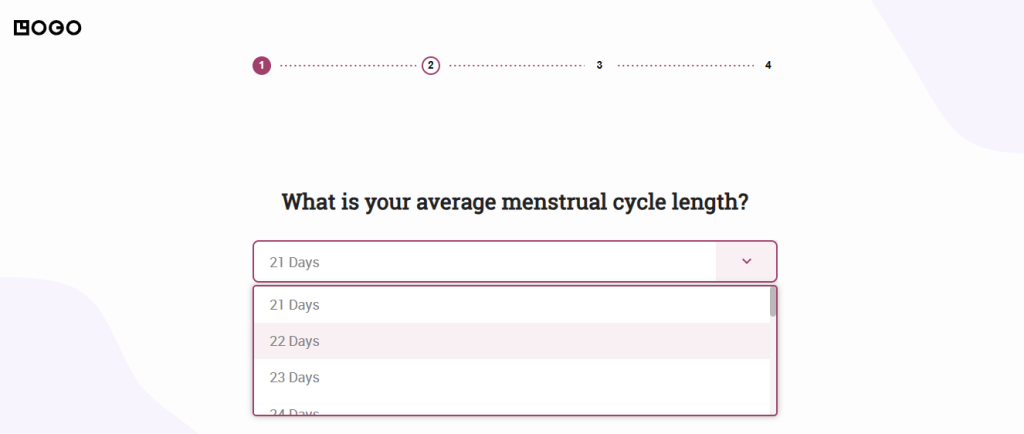
Step 1: Enter the first day of your last period
This is the anchor date everything else gets calculated from.
Step 2: Enter your average cycle length
Counted from the first day of one period to the first day of the next. This is what decides where ovulation lands.
Step 3: Enter how long your period usually lasts
This helps narrow down the early part of your cycle.
Step 4: Note whether your cycles are usually regular
Regular or irregular changes how much confidence to place in the result, and the ovulation calculator adjusts its messaging accordingly.
Step 5: Run the numbers
Enter everything and see what comes back. You’ll get an estimated ovulation day, a fertile window, a next period date, and a suggested day to test, all built around your own cycle instead of a generic average.
Try the Interactive Ovulation Calculator
No need to count days on a calendar by hand. The ovulation calculator below takes your cycle details and hands back your dates on the spot.
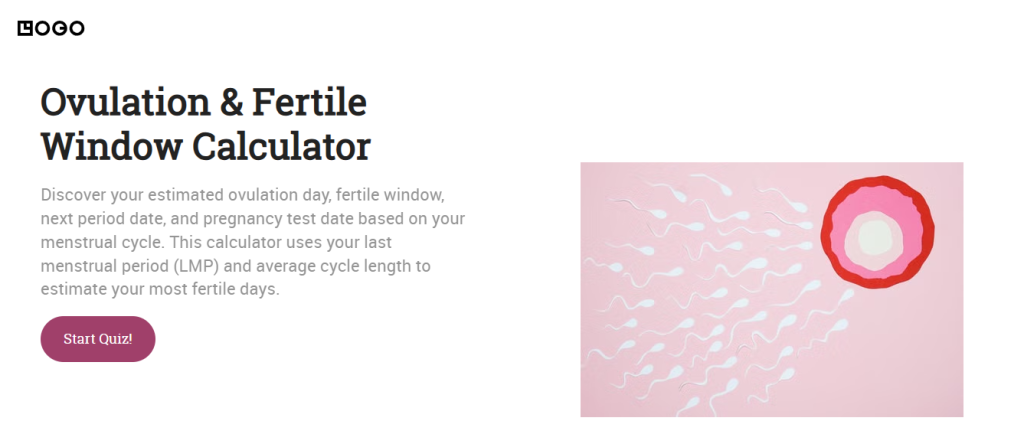
Try the Ovulation Calculator here.
How Outgrow Builds Ovulation Calculators (And Why That’s Useful)
Building something like this from scratch, something that handles date math, cycle variability, and clear result messaging, takes more effort than it looks at first. Getting the logic right, designing something that feels reassuring rather than clinical, making sure it works on mobile, embedding it properly. That alone can take days to get right.
Outgrow exists to close that gap. It’s a platform for building website calculators, quizzes, assessments, surveys, and recommendation tools, with no coding involved.
What you can build:
- Health and wellness calculators like this one
- Due date and pregnancy calculators
- Cycle tracking quizzes
- Fertility awareness assessments
- Recommendation tools for health and wellness products
Why Businesses Actually Bother With It
An ovulation calculator on a fertility, wellness, or women’s health site isn’t just answering a question; it’s collecting information with consent, understanding what stage of the journey someone’s at, and setting off automated follow-up through tools like HubSpot or Mailchimp.
It also works as a quiz maker, free survey maker, and free form builder, all in one place, but built around conversion specifically. You’re not just handing someone a set of dates. You’re setting up a piece of your funnel that keeps working on its own.
Worth knowing:
- Drag-and-drop, no code needed
- Logic branching so results shift with cycle length, period length, and regularity.
- Analytics and lead tracking, live
- Full control over branding and design
- Works embedded on any site or landing page
- Native integrations plus 1,000+ more through Zapier
- Mobile-ready from the start
How the Actual Outgrow Ovulation Calculator Works
Four things go in: the first day of the last period, average cycle length, period length, and cycle regularity. These get run through date math based on standard ovulation timing, and the answer comes back on a results screen as five separate dates: estimated ovulation day, fertile window start, fertile window end, next expected period, and suggested pregnancy test date, each with a plain explanation of what it means. A lead capture form sits right after the results, so the tool collects contact details from people who are actively thinking about their fertility.
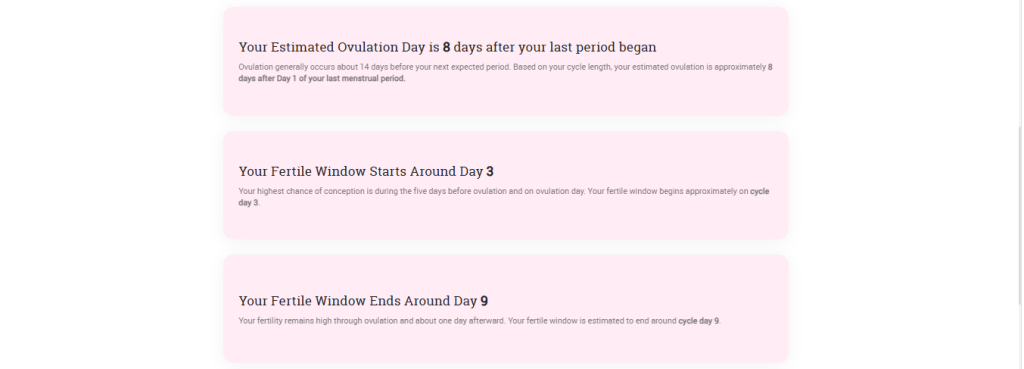
For any business trying to build trust with an audience while handing over something genuinely useful, an interactive ovulation calculator earns its spot on the site.
Ovulation Calculator Use Cases Across 5 Goals
The ovulation calculator looks different depending on who’s entering the numbers.
1. Trying to Conceive
Take a woman with a fairly regular 28-day cycle, using the ovulation calculator to plan intercourse timing. Her fertile window lands roughly between day 12 and day 17, with ovulation itself estimated around day 14.
Before she ran the numbers, timing was a rough guess based on general advice. Now there’s an actual window guiding when to focus effort.
2. Fertility Awareness and Natural Family Planning
Someone using natural methods to avoid pregnancy runs the ovulation calculator to map out which days carry the highest risk of conception. Knowing the fertile window in advance means fewer surprises and a clearer picture of which days call for extra caution.
Without that mapped out, “avoiding the risky days” tends to mean either overestimating the safe window or being far more cautious than necessary for weeks at a time.
3. Irregular Cycles
A woman whose cycles swing between 26 and 35 days runs the ovulation calculator and gets a wider estimated fertile window along with a note that irregular cycles carry more uncertainty. That’s still more useful than no estimate at all, and it flags that a doctor’s input might help narrow things down further.
This is the group the ovulation calculator helps most by simply setting realistic expectations rather than a false sense of precision.
4. Post-Miscarriage or Postpartum Tracking
Someone whose cycle is just starting to return to normal after a pregnancy loss or after giving birth runs the ovulation calculator once a period or two has passed, to get a fresh sense of timing. Cycles at this stage don’t always match older patterns, so a new set of dates matters more than relying on what used to be normal.
5. Confirming a Missed Period
Someone who tracked ovulation and is now a few days past their expected period uses the ovulation calculator’s suggested testing date to decide when a home pregnancy test is actually likely to give an accurate result, rather than testing too early and getting a misleading answer.
Mistakes People Make With the Ovulation Calculator
The date math behind the ovulation calculator holds up. It’s the inputs where people trip up.
- Guessing at cycle length instead of tracking it. A rough estimate of “about a month” produces a much fuzzier fertile window than an actual tracked average.
- Assuming every cycle is identical. Even fairly regular cycles shift a little month to month, so the ovulation calculator works best when it’s rerun each cycle rather than relying on one old result.
- Testing too early. Testing before the suggested date is one of the most common reasons for a false negative.
- Ignoring irregular cycle warnings. When the ovulation calculator flags a wider window due to irregularity, that’s a signal worth paying attention to, not a detail to skim past.
- Forgetting other fertility signs. Basal body temperature, cervical mucus changes, and ovulation predictor kits all add useful confirmation on top of what a date-based estimate can offer.
Building Your Own Ovulation Calculator with Outgrow
Want an ovulation website calculator built for your own site and your own audience? Outgrow’s builder gets you there fast, without much of a learning curve.

Basic setup looks like this:
Inputs:
- First day of last period
- Average cycle length
- Period length
- Cycle regularity
Formula:
Date math based on standard ovulation timing, adjusted for cycle length and flagged for irregularity.
Output:
Estimated ovulation day, fertile window start and end, next expected period, suggested pregnancy test date, a short explanation for each, and a lead capture form after the results.
Add conditional logic on top (a different message for irregular cycles, for example), connect the tool to your CRM, and track every interaction as a lead. Outgrow also doubles as an online survey tool, free questionnaire maker, and form builder with analytics included, so a follow-up survey about fertility goals can sit right on top of the calculator without needing separate platforms stitched together.
Conclusion: Know Your Ovulation Calculator Dates, Then Plan Around Them
The ovulation calculator isn’t complicated math. But knowing your fertile window is what separates planning with actual information from guessing based on a rough average.
Figure out your dates before the cycle that matters most. Before assuming this month looks just like last month. Before testing too early and second-guessing the result. The ovulation calculator gives you the starting point every timing decision should rest on.
Want a tool like this working for your own audience? Build a branded ovulation calculator with Outgrow and start turning site visitors into leads.
Sign up for the 7-day free Outgrow trial today and build your own ovulation calculator.
Frequently Asked Questions
An estimate of your ovulation day and fertile window based on your last period and average cycle length. It’s the set of dates that makes planning around conception, or avoiding it, much easier.
It’s a solid estimate built on standard cycle timing, not an exact science down to the hour. Ovulation can shift slightly from cycle to cycle, so treat the result as a strong starting point and adjust with other fertility signs if needed.
It does. A regular 28-day cycle gives a fairly tight fertile window, while irregular cycles produce a wider estimate with more built-in uncertainty, so being honest about your regularity matters.
Ovulation timing shifts right along with it. Relying on one old calculation instead of rerunning the numbers each cycle is one of the more common reasons people misjudge their fertile window.
Every cycle, ideally, especially if your cycle length isn’t perfectly consistent. Doing it fresh each time keeps the estimate lined up with what your body’s actually doing rather than an outdated pattern.

Muskan is a Marketing Analyst at Outgrow. She is working on multiple areas of marketing. On her days off though, she loves exploring new cafes, drinking coffee, and catching up with friends.