Product Survey Questions That Actually Get You Answers (Not Excuses)
Truth be told, most product surveys are terrible.
You send out a 25-question survey that contains such beauties as “How satisfied are you with our product on a scale of 1-10?” and you get a 4% response rate. The answers you do get? Useless.
A “7” doesn’t tell you what’s broken. It doesn’t tell you what to build next. It simply says that someone clicked a number so they could close the tab.
Good product survey questions are those that do three things: they’re specific enough that you can act on the answers, framed such that people actually want to respond, and reveal things your analytics can’t tell you.
It’s not about conducting surveys just because it makes you feel professional; rather, it’s to actually ask the right questions at the right time to help you make better decisions with regard to your product.
Why Most Product Surveys Get Ignored
Table of Contents
You know what happens when someone gets your survey email? They glance at it, see “15 minutes,” and think “I’ll do this later.”
Later never comes.
The questionnaires that do get returned have the twin advantages of brevity and queries for which people have opinions.
And when you ask, “How would you rate your overall experience?” That’s lazy. Nobody has strong feelings about that question. That’s corporate speak that really means “we’re checking a box.”
But when you ask, “What almost made you cancel last month?”, that’s specific. That’s real. People remember the moment they almost clicked the cancel button. They’ll tell you about it.
It all comes down to this: the difference between a survey people complete and one they ignore. Does responding to your questions feel like work, or does it feel like finally getting to tell someone what’s been bugging them?
The Core Product Survey Questions Every SaaS needs

Some questions work across almost every product. These give you baseline metrics you can track quarter over quarter.
If tomorrow we were to shut down, how would that affect you?
This tells you how embedded you are. “I’d be annoyed” means you’re nice to have. “My business would stop functioning” means you need to have. Track this over time. If the percentage saying “not much” goes up, you’ve got a problem brewing.
What were you using prior to finding us?
You’ll discover what problem you are actually solving: Sometimes it’s a competitor, sometimes it’s a spreadsheet, and sometimes it’s nothing. Each answer gives you something different about your position in the market.
Which feature do you use the most?
It is not which feature they like best; it is which one they actually use. There is a gap between those two things, and that gap is where the bad product decisions happen. If 80% of people say the same feature, that is your core value. Protect it.
What’s one thing that’s harder than it should be?
Open-ended. Scary. But this catches friction points your support team hasn’t escalated yet. Every time three people mention the same issue, you’ve found something to fix.
How likely are you to recommend us, and why?
That’s your Net Promoter Score, but what’s more meaningful than the number is the “why”. A “9” that says “it works fine” is less valuable than a “10” that says “this saved me 10 hours a week.” You want to hear intensity, not politeness.
Feature Prioritization Product Survey Questions
Your backlog has 200 items on it. Your team can build 10 this quarter. These questions help you pick the right 10.
Rank these five features in order, from most valuable to least valuable to you
Give them exactly five. Make them rank all five. You’ll see clear winners. When feature A keeps being ranked #1 and feature E keeps coming in at #5, your roadmap writes itself.
What takes the most of your time when using our product?
Time is friction. Friction kills retention. Whatever takes the longest is your next opportunity for optimization. Cut that time in half, and watch satisfaction scores climb.
What’s something that you are currently doing outside of our product that you wish you could do inside?
People will tell you exactly what they want. Sometimes it is realistic, sometimes it is “I wish your project management tool also did my taxes”, but you’ll find patterns in the realistic requests.
Would you upgrade to a higher plan if we built [specific features]?
Test the assumptions around monetization before you build. For example, if you think you may have a premium tier, you should survey your base-tier users. If nobody would upgrade to the features you are planning on building, then don’t build that tier.
Pricing Product Survey Questions That Actually Work
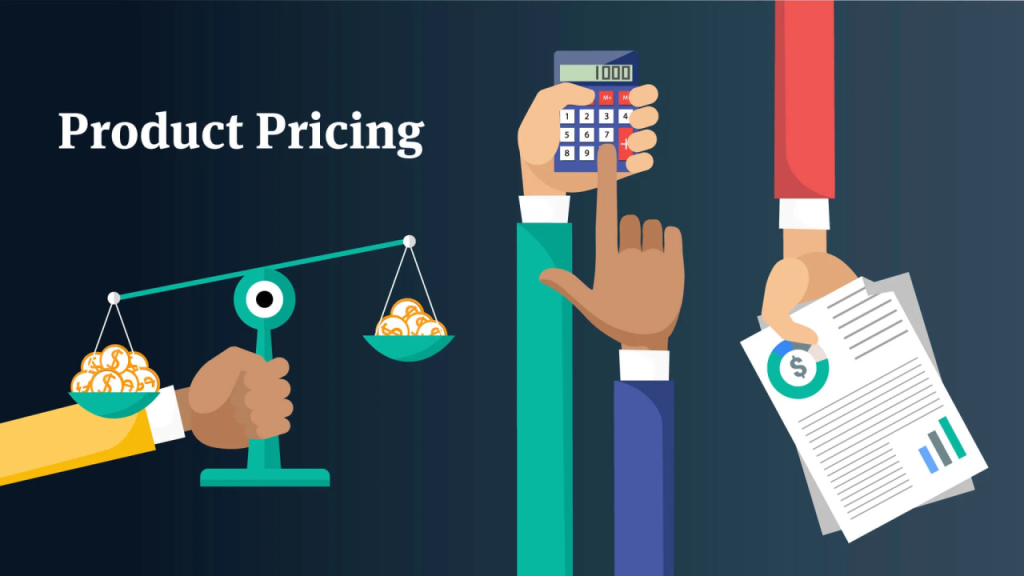
Pricing surveys are famously untrustworthy because people lie, or at least, they don’t know what they actually would pay. But these questions give you directional data.
At what price does this product become too expensive to consider?
That is your ceiling. Price above this, and you lose people fast. You want to know this number from both current customers and prospects.
How much are you currently spending on solutions to this problem?
Not what they would pay you, but what they’re spending in total across all the tools. If they’re spending $500/month on three tools, you can charge $400 and save them money while capturing more value.
How much more would you pay for the capability of [specific feature]?
Test your ideas for premium tiers before you build them. If 60% say yes to priority support but only 10% say yes to advanced analytics, you know which feature to build first.
Onboarding Product Survey Questions
Most churn happens within the first week. These questions help you figure out why.
What was confusing to you when you first used our product?
Whatever confused one person confused ten others, who just left. Fix the top three confusing things, and watch activation rates improve.
How long did it take you to accomplish your first meaningful task?
Time to value. Track it. Optimize it. When companies get users to value faster, retention is dramatically better. If the median is 3 hours and the best case is 20 minutes, you have work to do.
What would have made your first week more successful?
People will tell you what documentation, templates or hand-holding they need. Build it. Put it in front of the next cohort. Measure the difference.
Product Survey Questions for Churn Prevention
Someone just cancelled, so this is your last chance to learn from them.
What was the main reason you cancelled?
For one reason. Not a list. Force them to pick. You’re going to see patterns. If 40% say “too expensive”, and 30% say “didn’t use it enough”, those require completely different solutions.
What nearly caused you to cancel before eventually you did?
Early warning signs: This is where, with hindsight, it may have been possible to save the account. If you see these signals within other accounts, you know that you need to contact them.
Would you come back if we fixed [their specific issue]?
Tests how fixable your churn is, meaning: if people say “yes, definitely”, you must fix that issue. While if they say “probably not,” you have deeper problems.
User Segmentation Product Survey Questions
Not all users are alike. These questions help you group them in ways that matter.
What is your main purpose for using our product?
Use cases vary wildly. The person using your CRM for real estate has very different needs than the person using it to sell SaaS. Segment by goal, then build for each segment.
How many users of our product are on your team?
Solo users and teams behave differently, having different budgets, different needs, and different churn risks: track them separately.
How did you first hear about us?
Attribution: Your marketing team cares about this, but so should the product. Users coming from different channels usually have different expectations and different retention curves.
Competitive Intelligence Product Survey Questions
It’s about understanding how you stack up without giving away that you might be fishing for competitor information.
What do we do better, compared with other products you have used?
Your strengths: Double down on those in marketing and product development. If everyone is saying “ease of use,” then don’t make the interface complicated for power users.
What alternatives do you wish we did?
Categorize your gaps: Which of these is a real problem? Which is a feature that sounds good, but doesn’t matter? Cross-reference with usage data to figure out which is which.
How to Write Product Survey Questions That Work
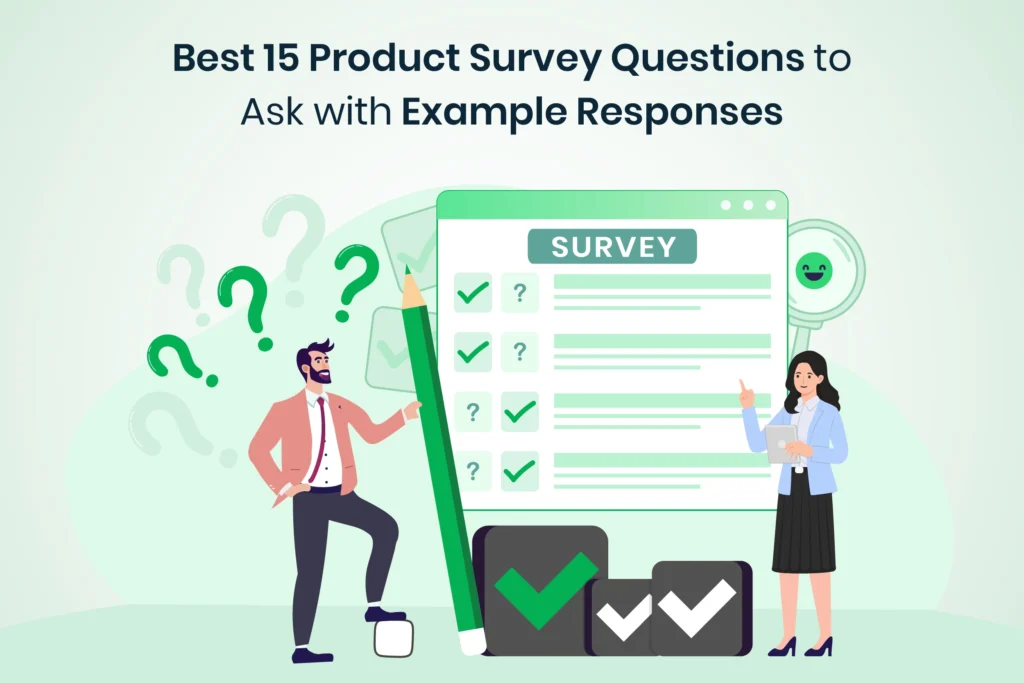
The mechanics matter more than one might think.
Keep questions concise, one idea, one question. If you are using “and,” make it two questions. People skim surveys. Dense questions get skipped.
Kill leading questions: “How much do you love our new feature?” is trash. “How useful is the new feature?” is better. “Did you use the new feature?” is best.
Give people an out, always include “I don’t know” or “Not applicable.” Forcing people to choose answers they don’t believe in poisons your data.
Use time-specific measures: “Do you use this on a regular basis?” is meaningless. “How many times did you use this in the last 7 days?” is measurable.
Keep them short: Ten questions are good, fifteen is pushing it, and twenty is testing patience. If you need more, send multiple short surveys over time.
When to Send Product Survey Questions: Timing Matters
Surveys sent at the wrong time tank response rates.
Right after someone completes a key action, not after sign-up, but after they get value, that’s when their opinions are worth listening to.
Immediately after trying a new feature: It’s fresh in their memory. Feedback will be accurate. A week has passed, and they have forgotten half of what they went through.
Within 24 hours of cancellation, Churn surveys have a short shelf life. Wait too long and people forget why they left.
Quarterly for annual contracts: Often enough to catch problems early. Not so often that you’re annoying.
Turn Survey Clicks into Real Engagement
Just wait, here it gets good.
Most guides take you through how to write survey questions and call it a day. In reality, that is just the first step in getting someone to click on your survey link. Getting them to actually complete it, and give thoughtful answers, is an entirely different matter.
We did a product feedback survey last quarter. Standard email, standard questions. Click-through rate was fine, 18%. The completion rate was terrible, 31%.
Then we did something quite different: instead of linking directly to the survey, we added a 30-second interactive assessment: “What Type of User Are You?”
Three questions. It took 40 seconds. Results:
- Click-through rate jumped to 24%
- Completion rate rose to 67%
- How to answer improved by 40%
Why? Because people who go through some kind of interactive content before taking a survey are already invested. They have already given some thought to their patterns of usage. By the time they come to your actual questions, they’re warmed up.
For feature prioritization surveys: Build a quick, interactive quiz asking about their workflows and auto-suggest which features would help the most. Now they’re not just ranking, they’re discovering.
Satisfaction surveys: Give them a little diagnostic upfront that shows them how they’re using the product compared to other users. Give them a little bit of context first, then ask them their thoughts. And the responses are just so much more thoughtful.
Churn surveys: Create a simple troubleshooter to walk them through common problems; if, after that, they still cancel, then you know it’s deeper than a fixable bug.
You can make these through tools such as Outgrow; it is pretty simple to set up and requires no coding. When people go through something interactive before they respond to some questions, they answer better. They become more mentally involved with their experience; they’re invested in the outcome.
Avoiding Common Product Survey Mistakes
Survey fatigue, you sent a survey two weeks ago, now you’re sending another. They begin to ignore you. Space surveys at least 60 days apart for the same audience.
No incentive for long surveys: If your survey is going to take more than 5 minutes, give them something. Gift card, trial of a premium feature, extended trial period. Respect their time.
Avoid asking questions you could answer with data: Don’t ask how often they use a feature. Check your analytics. You should save survey questions on things that can’t be automatically measured.
Too many open-ended questions: one or two is fine, seven is exhausting. People will skip them or give one-word answers.
The 80/20 of Product Survey Questions
If you’re skimming, this is what matters:
Ask fewer, better questions – Ten targeted questions beat 30 generic ones every time.
Time it right: Send out surveys at times when people can draw from recent experience, not at random intervals.
Make it interactive: Adding a quiz or assessment before the survey can improve completion rates and raise the quality of the responses.
Close the loop – tell people what you learned and what you’re changing. That’s how you get them to answer next time.
And that’s precisely what the companies which actually use product survey questions do well: they don’t treat them as a checkbox. They treat them as conversations. They ask specific questions at specific moments, and they do something with the answers.
That’s the difference between having survey data sitting in a folder and having survey data that changes your roadmap.
Ready to create product surveys that actually get completed?
Outgrow creates interactive surveys, quizzes, and assessments that return higher response rates and better data. Start free, no credit card required.
Product Survey Questions: Frequently Asked Questions
Product survey questions are targeted questions used to measure the feedback of your product users on the features, usability, and value of the product to make decisions in product development and to improve user experiences.
That means product surveys are best kept between 8-12 questions to maximize completion rates. Generally speaking, those longer than 15 questions tend to have completion rates below 50% and actually garner lower quality responses among those who reply.
Request feedback via in-product surveys at the moment a user has completed something important, immediately after trying a new feature, within 24 hours of cancelling, or quarterly to capture ongoing satisfaction.
Use both strategically: You can have 70% of your questions multiple-choice for tracking quantitatively, while 30% are open-ended questions to find those unexpected insights and detailed feedback that you can’t predict in advance.
Keep surveys under 5 minutes, describe what you do with the feedback, send at appropriate times, incentivize longer ones, and always communicate what changed based on the responses from the previous survey.

Deeksha Malik is a Marketing Professional at Outgrow, working at the crossroads of people, brand, and growth. She helps scale teams, strengthen employer branding, and drive B2B marketing campaigns that actually move the needle. Known for balancing strategy with execution, Deeksha enjoys building meaningful campaigns and smarter growth stories. When she’s not working, you’ll likely find her with a good cup of coffee, staying curious about marketing trends, people dynamics, and what makes a brand memorable.