Career Aptitude Test: Find the Career That Actually Fits You
Have you ever been in a job that you performed well in, but found yourself to hate every minute of it? Or watched a friend switch careers at thirty-five and suddenly seem like a completely different, happier person? There’s a reason for that too, and a career aptitude test is one of the simplest ways to figure out where you actually belong.
I’ve poked around a bunch of these tests over the years, mostly out of curiosity and partly because I kept wondering if marketing was really “my thing” or just the job I fell into.
Our brains are all wired differently, and that is actually the point.
Table of Contents
Nobody ever wants to be told that they are “just good with numbers” or “just good with creativity.” Real careers pull from all kinds of strengths at once. But most of us do lean naturally toward certain ways of working, certain problems, and certain environments where we do our best work.
That’s the whole idea behind a career aptitude test. It does not just give you some random label and call it a day. It studies what goes on in your mind, what inspires you, and how you behave in a team environment, and then recommends some job types where that trait can help you.
Some of the factors it evaluates are as follows:
- Working style and painting environment: Should you get a quiet desk, a lively studio, or a set of humans to brainstorm ideas?
- How do you approach the task to avoid stress: Should you go into details, state the problem approximately, or think of alternatives?
- Core strengths: Technical skills, human skills, creative thinking and foresight, strategy, or something else entirely?
- Values and Motivation: When the initial excitement of a new job wears off, what keeps you truly engaged?
- The role of the team: Are you the one who recognizes the problems, mobilizes the system, or quietly builds the party and probably all the other conversations?
How this is different from a personality test
Quick note here since people mix these up a lot. A personality test like Big Five indicates your tendencies in terms of your ways of thinking, feelings, and behaviors. Meanwhile, the career aptitude test goes one step further and uses the information supplied by the personality test in order to show certain job types that are best suited for a certain person.
Example Questions You Will Encounter in the Coursera Career Aptitude Test
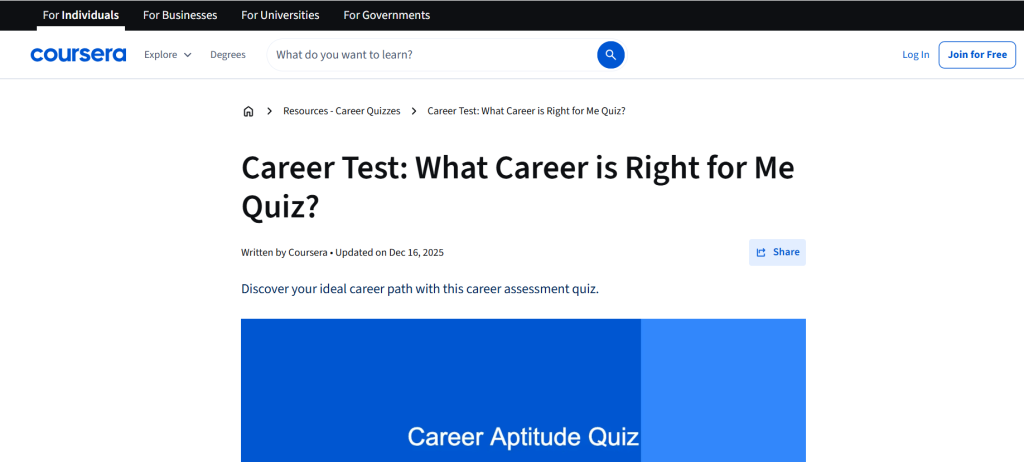
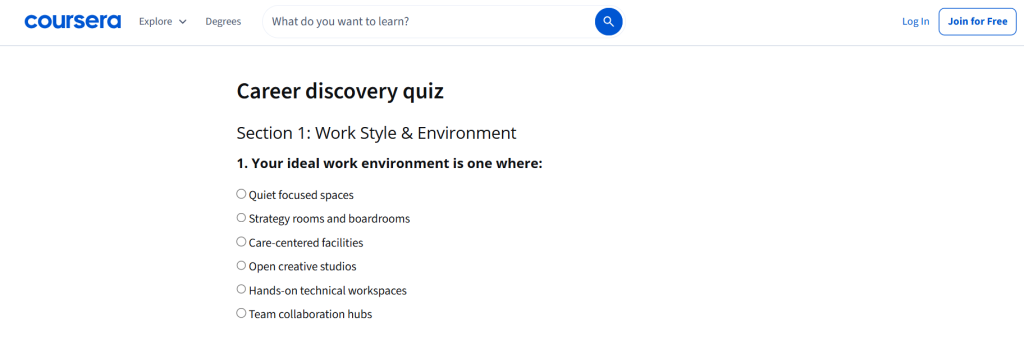
The Coursera Career Aptitude Test designs the questions around common-day preferences rather than theoretical elements, which makes the answers honest with no hesitations. Here are the details about the first section.
Question 1:Your ideal work environment is one where:
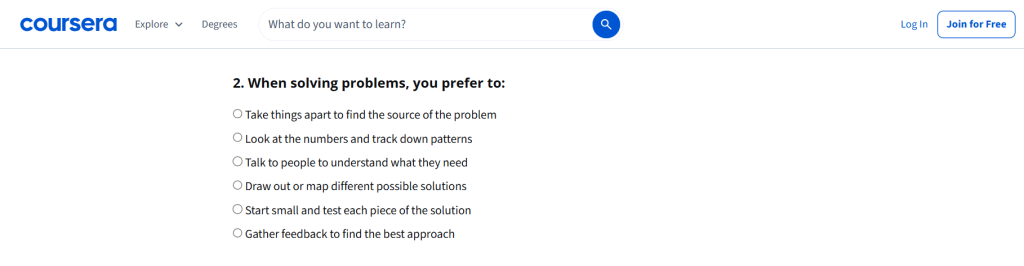
Question 2. When solving problems, you prefer to:
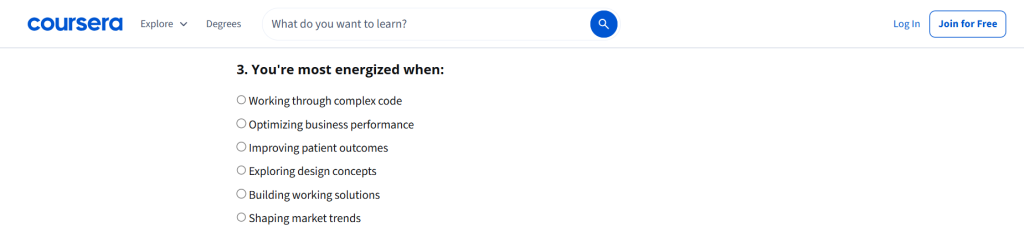
Question 3. You’re most energized when:
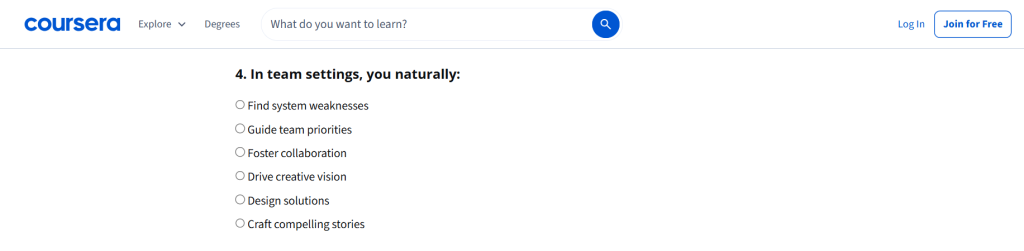
Question 4. In team settings, you naturally:
Question 5. You excel at handling:
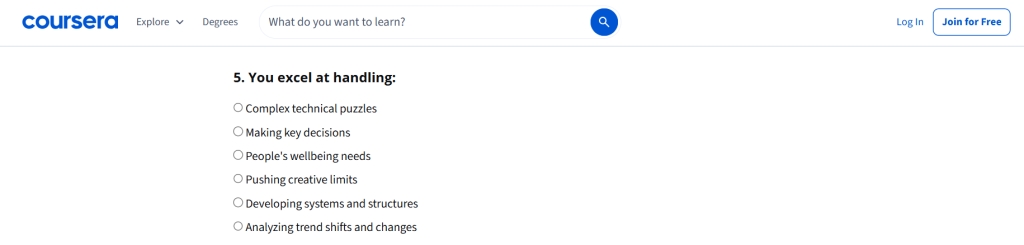
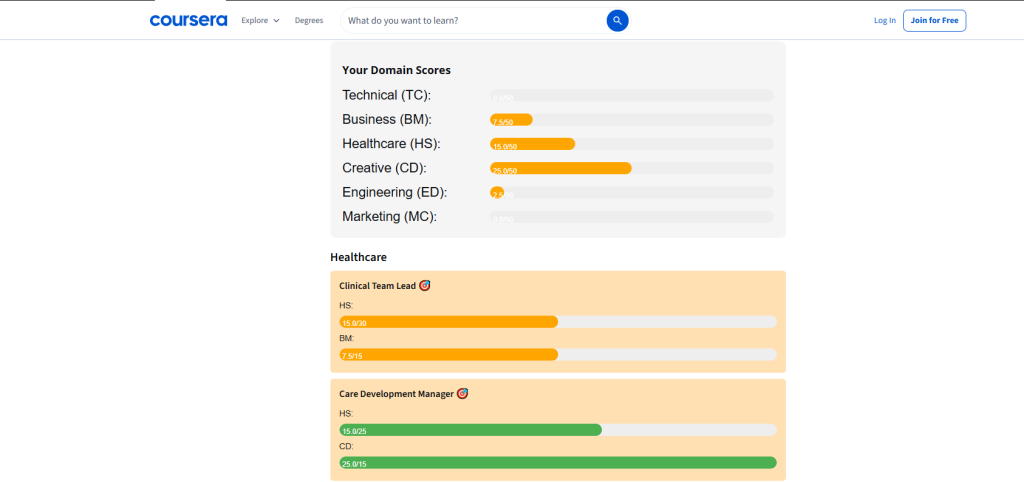
Each answer nudges your results toward a broader career cluster, whether that’s engineering, business, healthcare, design, or something you might not have considered yet.
What happens after you finish the test
This part often gets skipped in these kinds of posts, but it matters just as much as the questions themselves. Once you receive your results, typically most career aptitude tests will divide you into a number of career clusters with sample job titles. This is the very beginning of your journey, not the end of it. A few things worth doing next:
- Cross-check the suggested roles against skills you’d need to build or already have
- Talk to someone actually working in that field before assuming it’s the right fit
- Retake the test in six months to a year if you’re going through a big life change, since your answers can shift
- Use the results as a filter for job searching rather than a strict rulebook.
Why Career Aptitude Tests Matter Today
Career shifts nowadays are quite common. People change fields, begin working as freelancers, or completely change their profession more frequently than they used to. Many people are not able to figure out the right fit for their needs from the very beginning. Career aptitude tests have become a genuinely popular search term because people want a starting point that’s more reliable than guesswork or whatever their parents suggested at seventeen.
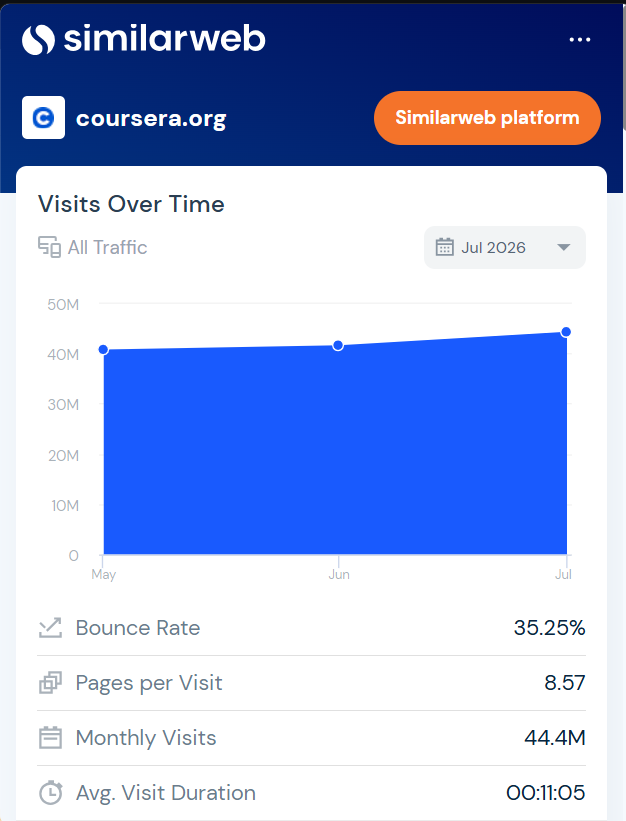
Source: SimilarWeb Traffic
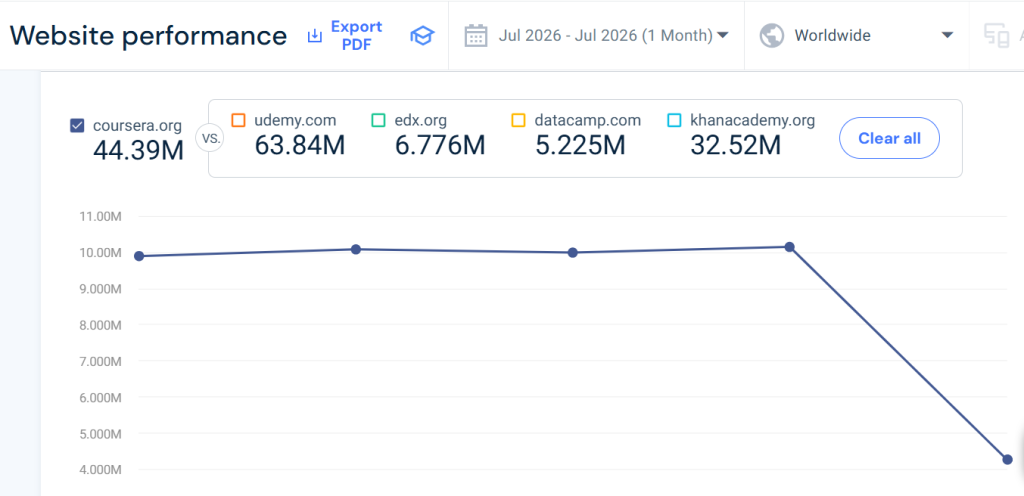
The numbers back this up too. The total number of visits to coursera.org is claimed to be about 44.4M a month as of July 2026, according to SimilarWeb data. The time spent by the users there is 11 minutes and 5 seconds, and the number of pages each user is going through is stated to equal 8.57, despite the fact that the bounce rate is only 35.25%, which indicates that most of the visitors stay on the site for good. People have always been looking for career orientation tools in a proactive way, not by chance.
The early discovery of one’s innate abilities means that one can avoid years dedicated to the pursuit of a venue that has an excellent outlook and yet reduces energy levels on a constant basis.
Create Your Own Career Quiz Using Outgrow
If you run a career coaching business, an HR platform, or an education brand and want to build something like this yourself, Outgrow makes it simple. No coding required, and you don’t have to start from a blank screen either.
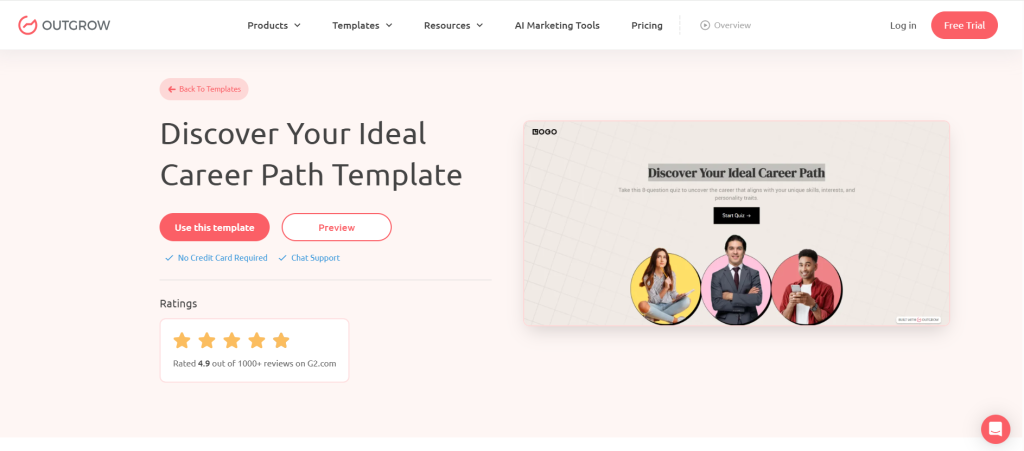
Outgrow already has a ready-made template for this exact use case called the Discover Your Ideal Career Path Template. It’s rated 4.9 out of 5 from over 1000 reviews on G2, and you can preview or use it directly without adding a credit card. Here’s what’s actually inside it, screen by screen.
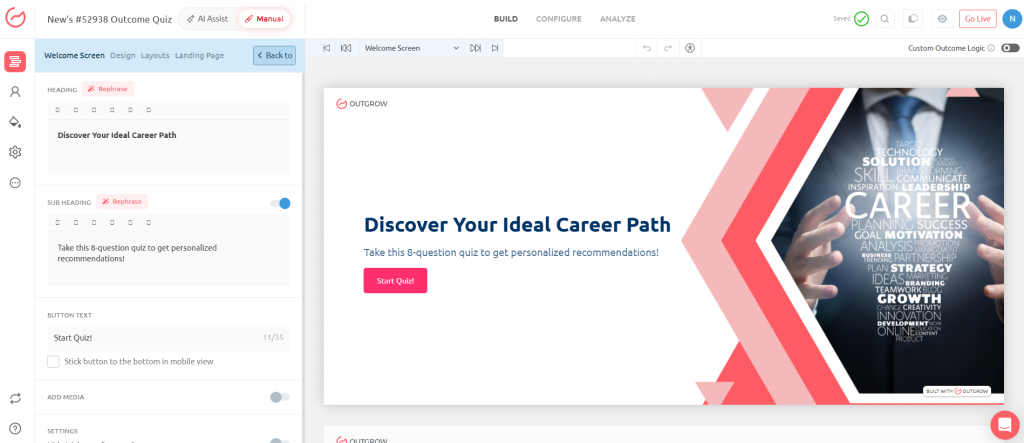
Welcome Screen
The first screen of the quiz works with the introduction “Find Your Perfect Job”, announces that the quiz contains 8 questions, and the simplest single button invites the person to start the quiz.
All 8 Questions appear one after the other with a progress bar, so people constantly know how far they have come.
- What is your preferred work environment?
- How do you handle pressure and pressure?
- What motivates you most about your career?
- How do you adapt to working with others?
- How long is your ideal organization?
- How important is work-life balance to you?
- What is your preferred leadership style?
- How do you troubleshoot as a technician?
Outcome Screen
Once someone submits their answers, they land on a results page framed around a career persona rather than a plain score. The possible outcomes in this example are:
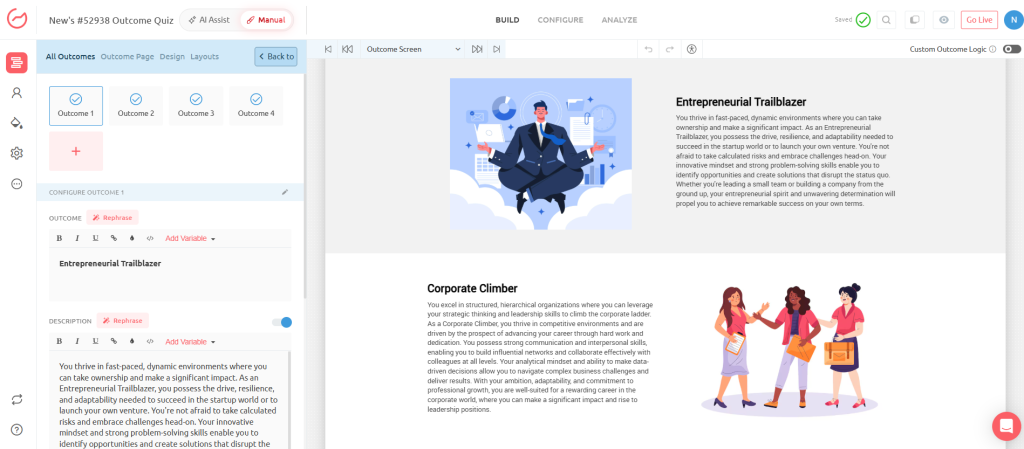
- Entrepreneurial Trailblazer: Perfect for environments where you feel comfortable taking risks and building something from the ground up.
- Corporate Climber: Perfect for dependent groups where strategic thinking and networking help you climb the ranks.
- Creative Approach: Ideal for working with installation, media, or integrated performance artworks, where originality and creativity come into play.
- Philanthropic Advocacy: Perfect for cause-driven careers, including non-profit advertising, advocacy, and politics, where tangible impact is most important.
Right above the results, there’s also a soft nudge that says “You’ve experienced one. Now let’s craft one!” along with a Build A Similar Quiz button, since the person who just finished the quiz is also a warm lead for building their own.
Lead Generation and Conclusion
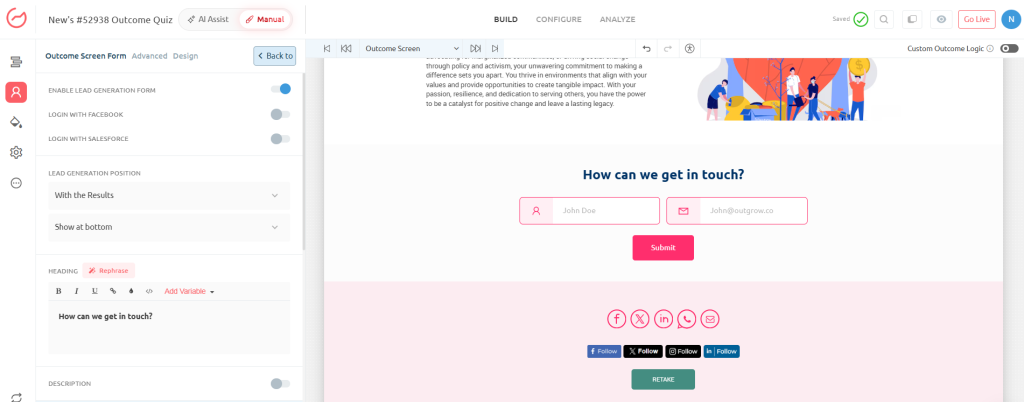
In essence, the final question of the quiz answers the simple question of “How can we reach you?” through the only requirements being the person’s name and email address. This is an easy way to generate leads without much commitment. At the end, the quiz provides social media icons and an option to repeat the quiz, so that those who want to give it another try shall be allowed to do this.
The beauty of this quiz is that it was designed in a way that makes it possible for anybody to create their own quizzes by adjusting some questions, names of outcomes, and visuals. After that, Outgrow’s analytics will help monitor how many people completed the quiz and which questions were too complicated to answer.
Does it actually matter?
Will one quiz change your entire career overnight? Probably not. However, there may be connections drawn from this. This may help to understand why one hates meetings but likes working late at night or why the person liked all jobs that involved the media, while he/she has always believed that he/she was not a people person. Sometimes just having terms for such preferences would help to make the right decisions in the future.
Final Thoughts
In the end, a job assessment tool won’t give you a 5-year plan or assure you of finding a job that you will enjoy. Instead, it provides you with terminology related to patterns about yourself that you might have already spotted without understanding them. This insight is very valuable and definitely worth spending 10 minutes answering such questions.
Regardless of whether you are thinking about your first job, a job swap, or simply wondering what results you will get, do not treat the results of the assessment as final. The best approach is to regard the results as starting information and formulate additional questions. For instance, conduct discussions with people, and carry out research on the jobs suggested by the tool and your own wishes.
Would you like to create an assessment for people? Outgrow allows you to design any assessments quickly and simply without programming knowledge at all.
Start your 7-day free trial
No strings attached and no credit card required.
Frequently Asked Questions About the Career Aptitude Test
Most versions measure your work style, problem-solving approach, core strengths, values, and how you naturally operate in a team, then map those to career clusters.
Usually, yes. Your core preferences tend to stay fairly consistent, though a major life change, a new skill set, or a shift in priorities can move the needle.
It’s legit. Career counselors and HR teams use aptitude assessments regularly, not just as an entertaining quiz.
No. A skills test checks what you can already do. A career aptitude test looks at what kind of work and environment suits you, regardless of your current skill level
Not necessarily, but it’s worth revisiting if you feel stuck or unsure about your next move. Preferences can shift with experience.

Ankit Upadhyay is a Digital Marketing and SEO Specialist at Outgrow. With a passion for driving growth through strategic content and technical SEO expertise, Ankit Upadhyay helps brands enhance their online visibility and connect with the right audience. When not optimizing websites or crafting marketing strategies, Ankit Upadhyay loves visiting new places and exploring nature.