Understanding the 16Personalities Test and Your MBTI Type!
Table of Contents
You know when someone asks about your personality type and you’re just like… uh? Or maybe you’ve killed time on those dumb quizzes that tell you what kind of sandwich you are. Really helpful, right?
But look, personality tests don’t need to be total garbage.
Tons of people use the 16personalities test and other versions of the MBTI test online to better understand themselves and their relationships. They start understanding why they react certain ways, who they mesh with, and what sets them off. The psychology behind it is legit – just without the textbook nonsense that puts everyone to sleep.
I’m breaking down why this test resonates, what you’ll discover, and how you might use similar tools for yourself or your audience.
What is 16Personalities?
16Personalities is a popular MBTI test platform based on the Myers-Briggs Type Indicator. Many people take the 16personalities mbti test to explore their personality traits, career strengths, and communication styles. The 16 personality test sorts people into 16 different personality types using four letters – like INTJ, ENFP, or ISTJ. You answer questions about how you think and behave, then get a detailed profile explaining your strengths, weaknesses, and how you interact with others. It’s widely used for self-discovery, career planning, and understanding relationships better.
What Makes 16Personalities Different
We’re not talking about “Which Hogwarts house matches your vibe?” This test builds on Myers-Briggs (you’ve probably heard of it) and throws in an extra layer that the original MBTI doesn’t touch. Unlike generic personality quizzes, the 16personalities test combines psychology-based insights with detailed reporting that feels highly personalized. The 16personalities mbti test also includes identity traits that make the results feel more nuanced than traditional personality assessments.
Five personality aspects:
- Energy: Introverted or Extraverted—How You Recharge Your Battery
- Mind: Observant or Intuitive—how you take stuff in
- Nature: Thinking or Feeling—how you make decisions
- Tactics: Judging or Prospecting—your approach to getting things done
- Identity: Assertive or Turbulent—basically your confidence level
You get a four-letter code (INFP, ESTJ, whatever) plus that fifth identity piece. Results tend to be freakishly accurate. Not vague like your horoscope, but genuinely “wait, how’d they know that?” accurate.
The test doesn’t judge. It shows patterns—what’s natural for you, where you excel, where you might faceplant, and how you interact with everything around you.
What the Questions Look Like
If you’re curious about the kind of 16personalities questions included in the assessment, here’s a small 16personalities test questions list showing how the quiz evaluates your thinking patterns and behaviors.
- “You regularly make new friends.” This checks your social energy. Do you collect friends like Pokémon? Extraverts usually say yes; introverts are more like, “Eh, not really.” You choose on a seven-point scale from “Agree” to “Disagree” so you can specify whether you REALLY agree or just kind of agree. These examples are similar to the types of 16personalities questions used in many modern personality assessments.

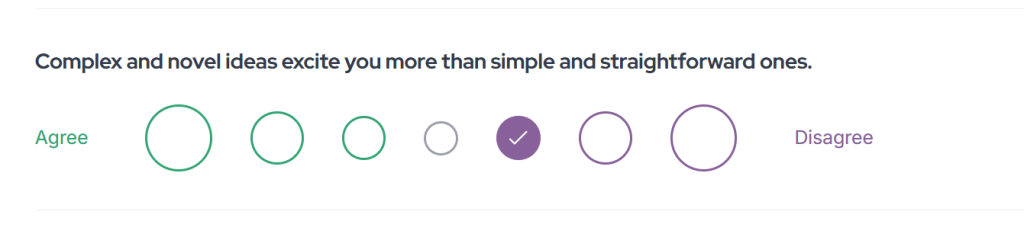
- “Complex and novel ideas excite you more than simple and straightforward ones.” This reveals how your brain operates. Intuitive people get all hyped about abstract concepts and possibilities. Observant types want practical, usable information they can actually do something with. Neither is superior—just different thinking styles.
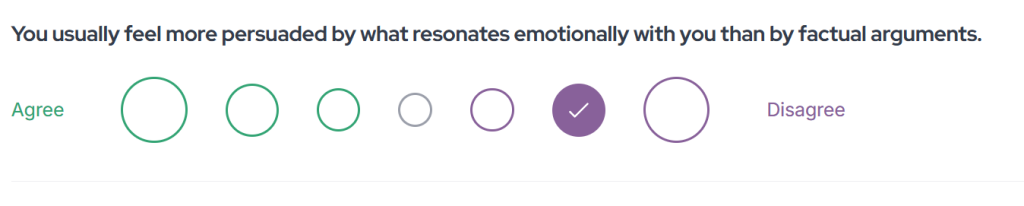
- “You usually feel more persuaded by what resonates emotionally with you than by factual arguments.” This exposes your decision-making process. Feeling types prioritize emotional truth and human impact. Thinking types want logic and hard data. We all use both, but this shows which dominates when push comes to shove.
The entire test follows this pattern – answer based on what you genuinely do, not what sounds impressive or what you wish you did. Honesty matters if you want useful results instead of feel-good BS.
Your Results
You get way more than four letters. You receive a complete profile covering:
Type Breakdown: Deep explanation of what your code means – how you think, what motivates you, your typical reactions to stuff.
Strengths and Weaknesses: They’re blunt about it. You see your natural talents and potential struggles laid out. INTJs excel at strategic thinking but sometimes seem cold or emotionally unavailable.
Romance and Relationships: How you approach love, what you need from partners, which types might mesh well (or create total chaos). People have legitimately resolved relationship problems using this section. Many users also compare results through a 16 personalities compatibility test to understand romantic dynamics and emotional compatibility.
Friendships: Who you naturally connect with, how you maintain friendships, what kind of friend you actually are. Introverts and extraverts don’t just prefer different hangout spots – they build relationships in fundamentally different ways. Friendship insights from the 16 personalities compatibility test can explain why certain personalities naturally connect better than others.
Parenting Style: If you’re a parent or considering it, this reveals your natural approach. Structured planner or spontaneous adventurer? Both work – just helps to know your default mode before you’re dealing with a screaming toddler at Target.
Career Stuff: Gets really practical here. They recommend careers that match how you work best. “Campaigners” (ENFPs) often discover why cubicles slowly kill their souls, but creative, people-oriented jobs energize them.
Workplace Habits: How you handle deadlines, collaborate, lead, and receive feedback. Understanding this helps you work more effectively and communicate with people who are wired completely differently from you.
The detailed reporting from the 16personalities mbti test helps users better understand both personal and professional relationships.
Who Should Take It?
Anyone searching for an accurate MBTI test online can benefit from the practical insights this assessment provides. Consider taking it if you:
- Can’t figure out what career actually makes sense for your brain
- Keep having identical conflicts with coworkers or partners without understanding why
- Manage people and want to grasp different working styles
- Wonder why solitude recharges you while your friend needs constant social interaction to function
- Feel defective for being introverted, analytical, emotional, or spontaneous
- Need to articulate strengths for job applications without sounding like everyone else
- Just want clarity on why you operate how you do
It takes about 12 minutes. Less time than scrolling Instagram, with insights that actually last longer than your next dopamine hit.
All 16 Types
Analysts (Intuitive + Thinking)
- INTJ – Architect: Big-picture strategists who see ten steps ahead
- INTP – Logician: Abstract problem solvers living in their heads
- ENTJ – Commander: Natural leaders who execute relentlessly
- ENTP – Debater: Sharp innovators questioning absolutely everything
Diplomats (Intuitive + Feeling)
- INFJ – Advocate: Idealistic visionaries driven by deep values
- INFP – Mediator: Empathetic dreamers seeking profound meaning
- ENFJ – Protagonist: Charismatic, inspiring leaders everyone gravitates toward
- ENFP – Campaigner: Enthusiastic creators craving endless possibilities
Sentinels (Observant + Judging)
- ISTJ – Logistician: Reliable organizers respecting tradition and structure
- ISFJ – Defender: Warm, protective caregivers putting others first
- ESTJ – Executive: Efficient managers creating order from chaos
- ESFJ – Consul: Social coordinators naturally connect people
Explorers (Observant + Prospecting)
- ISTP – Virtuoso: Hands-on experimenters loving absolute freedom
- ISFP – Adventurer: Artistic spirits living completely in the present
- ESTP – Entrepreneur: Bold risk-takers seizing every opportunity
- ESFP – Entertainer: Spontaneous performers spreading contagious joy
None’s superior. Each brings value. The point isn’t changing yourself – it’s understanding yourself so you work with your nature instead of constantly fighting it and wondering why everything feels hard.
Personality Testing in 2026
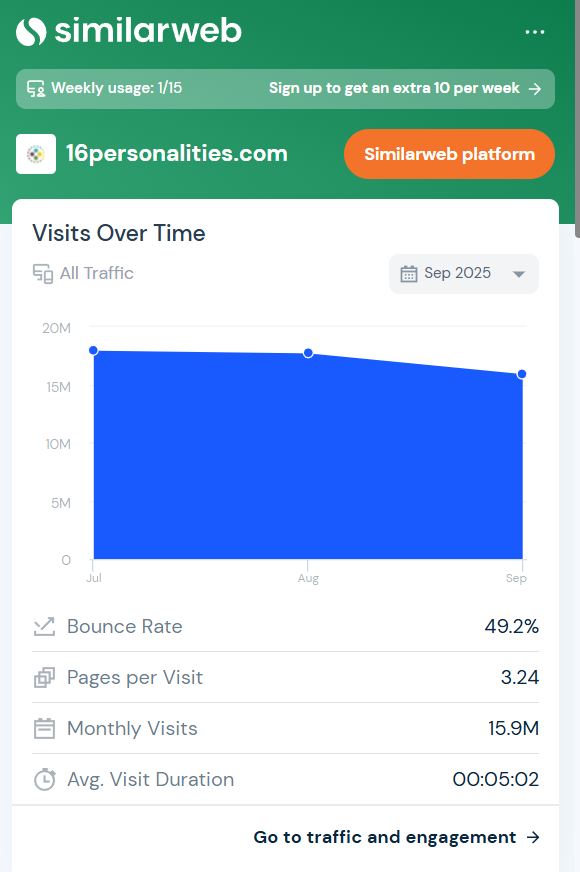
These assessments aren’t disappearing anytime soon. They’ve become standard for self-discovery, team building, and personal development across industries. You’re absolutely right that personality assessments have become deeply embedded in workplace culture and personal development. The scale is remarkable. 16Personalities attracts 15.9 million monthly visits, demonstrating just how mainstream these frameworks have become. As interest in the MBTI test continues growing, more people are using an MBTI test online for career planning, team building, and self-awareness.
Source: Similarweb
This year, especially, everyone wants quick personalized insights delivered fast. Whether for hiring decisions, relationship advice, or understanding why small talk physically drains you, personality tests deliver useful information without the therapy price tag.
Brands noticed too. Interactive personality quizzes effectively engage audiences and convert casual visitors into actual followers. The format works because it’s interactive, personally revealing, and people genuinely want to share results on social media.
Building Your Own Quiz with Outgrow
Want to create something like 16Personalities for your specific audience? Outgrow makes it manageable, even without any technical skills whatsoever:
1. Account Setup
Create an Outgrow account (or log in if you already have one). The interface is straightforward – no developer required

2. Choose Format:
Select the Personality Quiz or Assessment from your dashboard. Outgrow offers customizable templates or blank starts if you’re feeling adventurous.

3. Design Types
Decide your personality category count. Four or eight usually works significantly better than sixteen – people can’t remember sixteen different results. Examples:
- Leadership styles (Visionary, Executor, Collaborator, Innovator)
- Work preferences (Remote Warrior, Office Enthusiast, Hybrid Hero, Digital Nomad)
- Communication styles (Direct Communicator, Empathetic Listener, Analytical Thinker, Creative Storyteller)

4. Write Questions
Create questions aligning with your personality dimensions. Reviewing a 16personalities test questions list can help you design more engaging and psychologically relevant quiz experiences. Studying common 16personalities questions also helps improve quiz accuracy and audience engagement. For MBTI-style approaches, cover:
- Social energy (introversion/extraversion)
- Decision-making (logic/emotion)
- Planning style (structure/spontaneity)
- Information processing (details/big picture)

5. Configure Results Logic
Use Outgrow’s branching and scoring to assign types based on answers. Options include:
- Point values per answer
- Conditional paths to specific results
- Combined scores across multiple categories

High scores on “planning preference” and “logical decisions” might lead to the “Architect” type, for instance.
6. Launch and Integration
Outgrow simplifies embedding on websites, blogs, and landing pages. Connect it to:
- Email services (Mailchimp, Klaviyo)
- CRM platforms (HubSpot, Salesforce)
- E-commerce systems (Shopify, WooCommerce)

7. Analyze and Improve
Track quiz performance in Outgrow’s analytics dashboard.
- Completion rates (where exactly do people drop off?)
- Most common personality types emerging
- Traffic sources driving the best engagement
- Time spent on individual questions

Use this data to improve questions, adjust results, and try completely different formats. Keep refining based on actual user behavior, not assumptions.
Why Brands Love These Quizzes
Personality tests create genuine connections between brands and audiences through several mechanisms:
Self-Discovery Value: People genuinely enjoy learning about themselves. Provide real insights, and they automatically associate your brand with being helpful and knowledgeable instead of just selling stuff.
Better Engagement: Interactive content keeps people on your site significantly longer. Well-made quizzes dramatically reduce bounce rates and increase time on page.
Lead Generation requires email for results capture interested, qualified leads who actually want to hear from you.
Natural Sharing Quiz results become inherently shareable content. When people post results on Instagram or LinkedIn, that’s completely free brand exposure reaching their entire network.
Personalization Use quiz data to recommend specific products, services, or content pieces. Massively increases conversions because people feel genuinely understood rather than marketed to.
Final Thoughts
The 16Personalities test isn’t just about getting four random letters to put in your bio. It’s about genuinely understanding why you operate how you do, what environments actually suit you, and how to communicate effectively with differently-wired people without constant misunderstandings.
Whether you’re taking the 16personalities test for self-discovery or trying a 16 personalities compatibility test for relationship insights, these tools continue to shape how people understand themselves.
Whether you take it for personal growth, career direction, relationship insight, or pure curiosity, the real benefit is self-awareness. You stop constantly criticizing yourself for being “too quiet” or “too sensitive” and start genuinely appreciating your natural design.
For beginners exploring personality psychology, reviewing a complete 16personalities test questions list is a great way to understand how modern assessments work.
If you’re a creator, coach, or brand wanting to connect meaningfully with your audience, building personality quizzes opens significant opportunities. They’re naturally engaging, genuinely insightful, highly shareable. Platforms like Outgrow make it accessible even for complete first-timers without technical backgrounds.

Stop endlessly wondering who you are. Take the damn test. Build the quiz. Turn self-discovery into something actively helping you (and others) show up authentically in a world constantly demanding we be someone else.
Frequently Asked Questions About the Disney Quiz:
Accuracy depends entirely on answer honesty and consistency. Most people find descriptions remarkably accurate, though you might relate to some neighboring type traits too. Consider it a useful starting point for self-exploration, not an absolute truth carved in stone.
Core type usually stays relatively stable, but life experiences, intentional personal growth, and major transitions can shift how you express certain traits. Someone introverted at 25 might show more extraverted tendencies at 35 after deliberately developing those skills through necessity or desire. Retaking the test every few years can reveal interesting evolution patterns.
16Personalities adds the Assertive vs. Turbulent dimension – a fifth aspect that standard MBTI completely lacks. This measures stress tolerance and self-doubt handling, which significantly impacts daily life. They also use more accessible language (like “Mind” instead of “Sensing/Intuition”) that doesn’t require a psychology degree to understand.
Your type can guide you toward potentially fitting careers, but absolutely shouldn’t limit you. An ISFJ can absolutely succeed brilliantly in ENTJ-dominated fields if genuinely passionate about it. Use your type as helpful guidance, not rigid confinement that boxes you in forever.
Nope, Disney doesn’t allow embedding. Build your own using Outgrow, Typeform, or Interact. Takes time, but those platforms make it easy to copy the format and customize it for your brand.
customize it
Keep them short – 10 to 15 questions maximum. Write conversationally and clearly, like talking to a friend. Show progress bars so people know how much longer. Make results genuinely valuable and extremely shareable. Test your quiz yourself and with several others before launching to catch confusion or technical issues.

Bhawna Singh is a Marketing Generalist at Outgrow. With a knack for building connections and a talent for crafting impactful blog content, she ensures every piece resonates with the audience. When not strategizing campaigns, Bhawna channels her artistic side by bringing melodies to life through her singing or creating vibrant masterpieces on canvas.