


Marketing Automation with Interactive Content
Table of Contents
The traditional approach to marketing automation has its own limitations. Sending mass emails is as good as shooting an arrow in the dark. Naturally, you end up with poor ROIs and low engagement all because there weren’t enough quality leads. Even when you do generate leads, generic email blasts can quickly push prospects away.
This one-way communication no longer works in today’s marketing landscape, where there is already too much noise and not enough substance. Modern marketers need a more personalized way to attract, engage, and nurture prospects.
This is where interactive content marketing automation can make a difference. Instead of relying solely on generic campaigns, marketers can combine interactive experiences with automation to collect meaningful information, personalize communication, and improve marketing automation lead generation.
An effective interactive marketing automation strategy puts the user experience at the center of the marketing process while helping businesses turn engagement into actionable data. Used well, interactive content for lead generation can make each interaction more useful for both prospects and marketing teams.
Now, regardless of your intention, people are not okay with spam. They expect you to understand their pain points and provide practical, actionable tips on how to solve them. A 2015 research says 74% of people admitted to having less time to view content than in 2014, and the number is increasing every year.
So, as marketers, it is our responsibility to do away with the formulaic approach. You can make user experience central to marketing automation by delivering easily digestible, interactive content.
Pro Tip: Have a look at this amazing article on marketing automation!
Way Forward
According to Demand Gen Report’s 2015 Content Preferences survey, 91% of buyers prefer content that is visual and has an ‘element of interactivity’.
Instead of relying only on static content, marketers can use interactive content tools such as assessments, quizzes, online surveys, calculators, and more to get to know their prospects better. These formats are among the most flexible lead generation tools for marketers because they combine audience participation with useful first-party data. These tools work on a simple principle: visitors provide information, and based on their inputs, you provide them with a valuable, personalized output.
At the same time, the information they share can help you understand and profile your prospects. This approach is particularly useful when creating interactive content for B2B lead generation, because prospects can receive immediate value while marketers collect insights that can support segmentation and lead nurturing. A well-planned interactive content platform can help teams create these experiences and use the responses to inform follow-up campaigns.
Let’s take a look at the different interactive experiences you can create and how they can benefit your marketing automation strategy.
Assessments
Assessments are interactive tools that can be used to ask a series of questions to open up a dialogue. They can be used to evaluate products, benchmark, determine personalities, etc. These are immersive, thought-provoking, and obviously demand more attention from prospects.
A well-made assessment gets people to share rich data. You can use this data to influence their journey by providing customized solutions. So, get talking with your sales reps who interact with potential leads daily. Brainstorm on the kind of assessment (personality or range) tool that can garner quality leads. You will be encouraged to know that more than 20% of respondents in the Demand Gen Report’s 2015 Content Preferences survey report using assessments for researching B2B purchase decisions.
When creating assessments as part of your interactive content tools strategy, keep the following points in mind. As one of the practical lead generation tools for marketers, an assessment should offer a clear benefit in exchange for the information a visitor shares:
Less is more: The more you push the prospect, the farther they’ll get away from you. So, determine results in as few questions as possible.
If your goal is to create awareness, 3-5 questions suffice; if you want to educate prospects then don’t include more than eight questions; and finally in the conversion stage stick to asking ten questions.
Watch your tone: It should be a fine balance between concise and conversational and must, of course, be in sync with your brand personality.
Make it fun: Even the blandest topic can be made interesting. Let’s say you are a sales firm, then, how about creating an assessment called “What is your Sales Ninja personality”?
Guide them: On the results page, don’t overwhelm with too much information. You can open up relevant links or perhaps give them access to a downloadable pdf.
Follow Up: Deliver personalized results and thereafter begin nurturing them with relevant solutions. This is particularly valuable when using interactive content for B2B lead generation, where the information collected through an assessment can help you create more targeted follow-up campaigns.
Here’s an example of an assessment that we created at Outgrow:
Quizzes
Another type of interactive content – quiz generates huge buzz owing to its inherently social and shareable nature. You can also plug this tool into the lead-generation phase to spread a word and generate buzz. Of course, they have to be super fun while at the same time serving your purpose of capturing leads. Think of questions relevant to your industry. A quiz maker for lead generation can help you turn these questions into an experience that captures contact details alongside audience preferences.
One of the best examples to learn from is TAG Livros who decided to try a quiz as a part of their lead-generation campaigns. Built on the Outgrow platform, the quiz was embedded on their website. The outcome was phenomenal and they witnessed a 32% conversion rate. Incredible, isn’t it?
Wondering why it was such a huge hit? Well, for starters, since they are a book sign-up club they created a quiz that targeted bibliophiles. The premise of the quiz was that it would tell people about the bestseller book from the year they were born in.
And who wouldn’t want to boast about it? The responses were naturally share-worthy which explains why TAG Livros made a noise on social media. Through targeted FB ads they generated 900 like/reactions and 120 shares! A quiz can therefore support marketing automation lead generation by combining audience engagement with valuable first-party data that can later be used for segmentation and nurturing.
By connecting quiz responses with your automation workflows, you can further strengthen marketing automation lead generation by delivering personalized follow-ups based on each prospect’s interests, preferences, or responses. With a quiz maker for lead generation, those responses can also help you group prospects by intent and tailor the next message.

Calculators
A calculator is a tool that requires users to input data that can generate numerical results with the help of a set formula. Because of its simplicity and personalized nature, it engages users pretty well. Since the tool is user-driven it means they will input ‘genuine’ information that you can eventually use to build your case on.
Generally, calculators are very popular with real estate and financial institutions. Think EMI Calculator, Rent vs. Buy Calculator, Risk Calculator, etc. However, if you are thinking that these calculators are limited to real estate or banking websites then you are wrong. Magazines like Cosmopolitan are using calculators since they are highly engaging.
By using a calculator for interactive content marketing automation, you can accomplish two important goals. Calculators are another form of interactive content for lead generation because they deliver personalized answers while revealing what a prospect is trying to solve.
#1 You empower the sales team with concrete data that goes beyond a name and an email. It helps provide the sales team with more information about the leads so that they can actually pitch solutions based on every prospect’s needs.
#2 You enable your customer to understand their needs to prepare them better for the sales conversation. This is also why calculators can be highly effective as interactive content for B2B lead generation. Instead of simply collecting contact information, you can gather useful business inputs that provide context around a prospect’s needs..
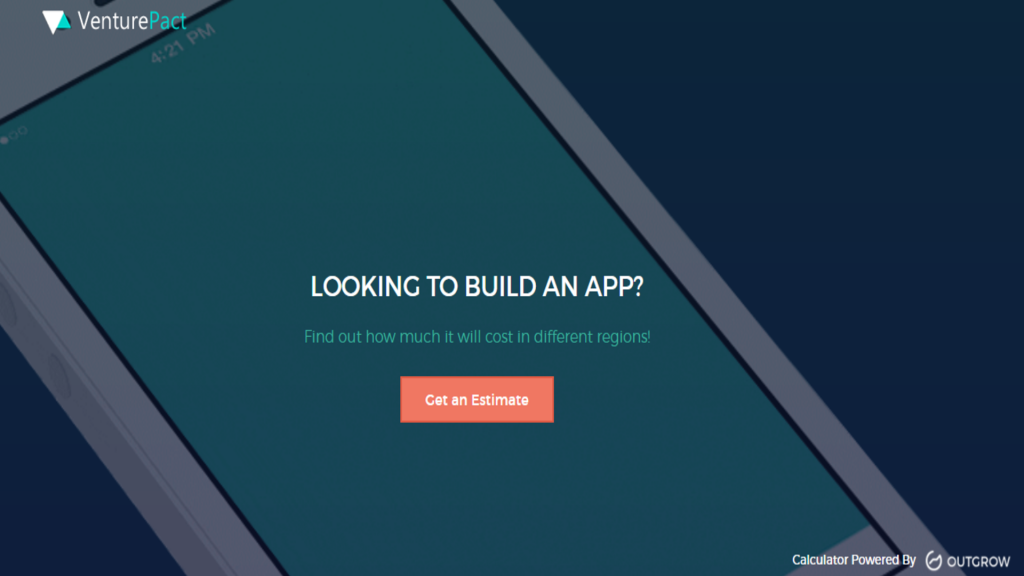
Since calculators make data visualization easy, VenturePact a software development marketplace decided to leverage its benefits. Within two weeks of launch, the calculator they built using Outgrow platform, bumped up the traffic by 15% traffic also conversion rate by 28%!
Interactive Whitepapers and PDFs
Marketing requires improvisation at every stage, especially when you have your prospects’ attention. The DemandGen Report once again states that companies that excel at lead nurturing generate 50% more sales leads at 33% lower cost per lead.
Because white papers and pdfs tend to be information-heavy they can be given a make-over by making them interactive. Once it reaches customers you can easily track sections that were most viewed. Since you can pair assessments, calculators and other widgets you also gain access to what information they entered.
All of this can help your sales team develop insight and assess customer’s needs and expectations. This makes interactive whitepapers one of several valuable interactive content tools for marketers looking to turn existing static assets into engaging experiences. Together, these formats can make an interactive content platform a central part of a more helpful, data-informed marketing strategy. So, start repurposing static content on your website. Besides, remember that the more you continue to stay in touch with relevant content, the more your chances of cross-selling or upselling.
One of our favorite interactive whitepapers is by Hyatt Legal Plans. Backed with research, it simplifies a complex issue: how employers can improve employee wellness through legal benefits. They divided the white paper into chapters rather than pages of static content. Based on what’s their pain point, users can access options in front of them. The white paper is downloadable too which can help a marketer find out which user actually seems more interested in Hyatt’s legal plans.

How to Use Interactive Content for Marketing Automation and Lead Generation
Interactive content can become even more powerful when connected to your marketing automation platform.
The key is to use every interaction as an opportunity to learn more about your audience and then use those insights to deliver more relevant communication.
When you combine interactive marketing automation with quizzes, assessments, calculators, and other experiences, you can create a feedback loop where users receive value while marketers collect actionable information.
How to Connect Interactive Content to Marketing Automation Workflows
Connecting interactive experiences to marketing automation workflows helps turn each response into a relevant next step. The exact setup depends on the tools you use, but the process usually follows a few practical steps.
1. Choose the right experience
Match a quiz, assessment, calculator, or survey to the question your audience is trying to answer. A quiz maker for lead generation is useful when you want to capture preferences, interests, or readiness signals.
2. Decide which information to collect
Ask only for details that support a clear purpose, such as an email address, company size, challenge, or product interest. Keep the experience concise and explain the value users will receive.
3. Connect your tools
Use a native integration or an available connector to pass submitted contact details and response data from your interactive content platform to your marketing automation system or CRM.
4. Map fields and apply tags
Match each response field to the right contact property. Use relevant answers to segment contacts by interest, need, or stage in the buying journey.
5. Build useful workflow rules
Set up follow-up emails or internal notifications based on the information collected. For example, someone who indicates a specific challenge can receive content that addresses that challenge rather than a generic email blast.
6. Test the full journey
Submit test responses, check that fields and tags arrive correctly, and confirm that the intended workflow starts only under the right conditions.
7. Measure and improve
Track completion rates, qualified leads, email engagement, and downstream conversions. Use these results to improve the questions, results page, segmentation, and follow-up messages.
This approach helps make interactive content for lead generation part of a connected customer journey instead of a standalone campaign. It also gives lead generation tools for marketers a clearer role in qualification, segmentation, and nurturing.
Integrate Interactive Content with your Marketing Automation Platform
Once you generate leads with the help of the aforementioned tools, send them to marketing automation tools in order to nurture them. According to a Genius.com study, 66% of buyers indicate that “consistent and relevant communication provided by both sales and marketing organizations” plays a key role in their buying decision. In fact, Market2Lead study reveals that nurtured leads experience a 23% shorter sales cycle.
For example, if you use Outgrow, you can send data generated by quizzes, calculators, and assessments to any marketing automation platform of your choice.
This rich data can help take your interactive content marketing automation strategy to the next level by giving your marketing and sales teams more context for lead nurturing and targeting. The result is a smarter approach to interactive marketing automation, where prospects receive more relevant messages based on their interests, responses, and needs.
Remember: With interactive content, you generate organic leads that demand constant care and attention till the time they become your customers and even after that. Interactive content helps you get more results from marketing automation through its ability to get more leads together with rich data about the leads.
Essentially, if you see, it all boils down to creating relevant-to-your-business content and making it interactive so that it addresses prospects’ interests, needs and challenges. Are you up for it?
Interactive experiences can do more than just fueling your marketing automation system. They increase conversion rate and get you business. It’s time you try them for your business.






One Comment